Monday, October 29, 2018

Between Two Millstones: Sketches of Exile, 1974-1977


Aleksandr Solzhenitsyn, the Nobel Prizing writing writer and Soviet dissident, spent 18 of his 20 years in exile in Cavendish, VT. With the publication of Between Two Millstones: Sketches of Exile, 1974-1977 now there is more than a glimpse of what life was like for him during this time.

"Between Two Millstones" contains vivid descriptions of Solzhenitsyn's journeys to various European countries and North American locales, where he and his wife Natalia (“Alya”) searched for a location to settle their young family. There are fascinating descriptions of one-on-one meetings with prominent individuals, detailed accounts of public speeches such as the 1978 Harvard University commencement, comments on his television appearances, accounts of his struggles with unscrupulous publishers and agents who mishandled the Western editions of his books, and the KGB disinformation efforts to besmirch his name. There are also passages on Solzhenitsyn's family and their property in Cavendish, Vermont, whose forested hillsides and harsh winters evoked his Russian homeland, and where he could finally work undisturbed on his ten-volume history of the Russian Revolution, The Red Wheel. Stories include the efforts made to assure a proper education for the writer's three sons, their desire to return one day to their home in Russia, and descriptions of his extraordinary wife, editor, literary advisor, and director of the Russian Social Fund, Alya, who successfully arranged, at great peril to herself and to her family, to smuggle Solzhenitsyn's invaluable archive out of the Soviet Union. Notre Dame Press 

For Vermonters, Senator Patrick Leahy summed it up when he wrote, Aleksandr Solzhenitsyn took to Vermont and Vermonters took to him. I felt it a privilege to have met with him in his new Vermont setting, and I know that our state’s forested beauty reminded him of home. We are proud that he believed that his homeland, and the world, could learn from the local self-government that is embodied in Town Meeting Day in towns and hamlets across the Green Mountain State.”

There were differing ideas of how Solzhenitsyn lived in Cavendish- a self -imposed “gulag,” to a lavish lifestyle in a “gated” compound. However, the truth was quite different. The suddenness of our move caught everyone’s attention: it is unacceptable for people of fame not to inform the world of what they are doing, not to advertise their next move but to go ahead and do what they want unannounced. Over a hundred press vehicles now converged on the tiny town of Cavendish from Boston, from New York, quizzing the townspeople to get information, journalists crowding in front of our gate, scurrying along our fence—they even arranged for a helicopter to fly over our property and take pictures. ....To make things worse, our light chain-link fence had a single strand of barbed wire on top where the fence ran along the side of the road, to hook the pants of snoopers trying to climb over. This single strand of barbed wire the media now magnified into a “barbed-wire fence surrounding the entire property,” and that it was if I were willing myself up in a new prison, a “self-imposed gulag.” I did intend to sequester myself, not in a prison but in a tranquil refuge, the kind necessary for creativity in this mad, whirling world. But the press also picked up details from the locals about us having a pond, setting off the legend about my “swimming pool,” which immediately turned our supposed life within a prion into a “bourgeois lifestyle” in which the Solzhenitsyn family now intended to indulge. Ah, wretches, they were writing not about us but about themselves, revealing what mattered to them. We have been expelled from our country, our hearts are constricted, my wife’s eyes are never dry of tears, only work can save us—and that is our so-called “bourgeois lifestyle.”

Between Two Millstones is available at Amazon in both hardcover and Kindle formats.


Monday, October 8, 2018

Vermont Native American Timeline


UPDATED OCTOBER 2019

Note that there are various videos listed at the end of this article, including the film made about the Paleoindian dig at Jackson Gore. 


9,500 > Years ago Paleo-Indian Era (Stone Age culture) As the Laurentian ice sheet retreated north,  the first peoples entered VT around 12,500 year ago. Champlain Sea. Warmer than in other locations. Mastodon and mammoth. They traveled as well as traded-stone, which was from New York, Quebec, Maine, Pennsylvania, Ohio and other places. Small groups, less than 10.

3,000-9,500 Years Ago: Archaic Period. Warmer temps helped to shape many kinds of wetland from lakes and ponds to swamps and bogs. Champlain Sea shrunk turning from salt water to fresh water. Lake Champlain was likely lower than its present day level. Hardwood forests appear-beech, oak, ash and maple. Rely on more local stone in VT. Groups began moving to different areas for season. The presence of a large variety of woodworking tools in Archaic assemblages suggest that water crafts were used for travel, fishing, and probably other animal procurement activities. In the latter part of the archaic period, fruit and nut bearing trees began to grow and native populations expanded with communities being forming.  At the end, temperatures drop

Early Woodland 2,000-3,000: Preferred not to live in the higher elevations and spend most of their time in the warmer river valleys. Population decreases. Cemeteries from this period Pottery Bow and Arrow. Connected with people in Ohio and across the Northeast. These were spiritual people who were deeply connected to their ancestors and to the land

Middle Woodland 1,000-2,000 Temps began to rise and with it an increase in population. Once again using stone from far away places for stone tools. Dugout canoes have been found throughout the Champlain Valley. Native Americans in the region had developed a culture based on the selective borrowing of ideas and innovations from other people with whom they had come in contact over the past 9000 years. The people of the Woodland Period were becoming more sedentary in their living habits, and established substantial settlements on the floodplains of major rivers, such as the Winooski and Otter Creek. The subsistence patterns of prehistoric Champlain Valley residents gradually changed from mobile hunting and fishing parties to a dependence upon horticulture and the gathering of a greater diversity and quantity of wild plant foods.

Pre European Contact -1,000 Temps remained steady or slightly increased. Pottery expanded and see pipes for the first time-ceramics. Cultivation of crops-three sisters (corn, beans and squash). Agricultural tips were passed through trade networks. First existence of farming in New England occurs in VT in the 12th Century.

1535: Jacques Cartier (1491-1557) is first European to sight Vermont. Attempts to develop trade relations with the St. Lawrence Iroquois and other tribes living along the banks of the St. Lawrence River. The French attempt to establish a colony in the St. Lawrence Valley during the sixteenth century failed, although sporadic trade for furs in exchange for metal tools did occur between the French and the St. Lawrence tribes. By 1603, the diseases which the St. Lawrence Iroquois contracted from the French spread quickly throughout the Champlain Valley, decimating the native population. The struggle over French trade also caused great unrest in the Champlain Valley. The Mohawk Iroquois, who inhabited primarily the Mohawk Valley, became the dominant tribe from Quebec to Connecticut. By 1609 the Western Abenaki had retreated from the Champlain Valley in an effort to escape destruction at the hands of the Mohawk.

1688: 1688 - 1763 The French and Indian Wars between France and Great Britain for lands in North America consisting of King William's War (1688-1699), Queen Anne's War (1702-1713), King George's War (1744 - 1748) and the French and Indian War aka the Seven Years War (1754-1763)

1688: (1688-1699) King William's War (part of the French and Indian Wars) between France and the Wabanaki Confederacy and England and the Iroquois Confederacy. Peace Treaty made at Pemaquid. August 11,1693. and was ratified on Jan. 7. 1699

1702: (1702-1713) Queen Anne's War (part of the French and Indian Wars) between the French and Spanish colonies allied with the Wabanaki Confederacy, Mohawk, Choctaw, Timucua, Apalachee and Natchez tribes against the British colonies allied with the Muscogee (Creek), Chickasaw and Yamasee tribes.

1744: (1744–1748) King George's War (part of the French and Indian Wars) between the French colonies allied with the Wabanaki Confederacy and the British colonies allied with Iroquois Confederacy

1754: 1754 - 1763: The French Indian War is won by Great Britain


1775: 1783 The American Revolution.

1776: July 4, 1776 - United States Declaration of Independence

1780: Last major Indian raid, led by the British, in Royalton

1812: 1812 - 1815: The War of 1812 between U.S. and Great Britain, ended in a stalemate but confirmed America's Independence

1830: Indian Removal Act

1832: Department of Indian Affairs established

1861: 1861 - 1865: The American Civil War.

1862: U.S. Congress passes Homestead Act opening the Great Plains to settlers

1887: Dawes General Allotment Act passed by Congress leads to the break up of the large Indian Reservations and the sale of Indian lands to white settlers

1931: Vermont approved its sterilization law. Eugenics. Poor and socially ostracized families were targeted for investigation of the three D’s (delinquency, dependency, and mental defect). These families usually lived “outside the accepted moral or social convention of middle class America” (Gallagher, p. 37). The three D’s were used to target the poor, the disabled, French-Canadians, and Native Americans. Women were targeted more than men. French-Canadians and Abenakis were seen as a foe and threat to the early colonial settlers of Vermont.  They represented “an insidious and continuous invasion” of Vermont and were therefore targeted (Gallagher, p. 45).  Studies done on degenerate family lines were often traced back to French Canadian or Native American ancestry and were used to target these groups (Gallagher, pp. 80-82). the last noted sterilization in Vermont occurred in 1957, between 1973 and 1976, approximately 3,400 Native American women, according to the General Accounting Office, were sterilized in the United States without properly obtaining consent (Dowbiggin, p. 181; see also Forbes 2011).

1969: All Indians declared citizens of U.S.

1979: American Indian Religious Freedom Act was passed


Roger Longtoe Sheehan, Chief Elnu
Today: Vermont has a Vermont Commission on Native American Affairs  and recognizes four Vermont Tribes:
• Abenaki Nation at Missiquoi
  Koasek Band of KoasAbenaki Nation
Elnu Abenaki (Tribe for Southern VT, includes Cavendish.)
Nulhegan Abenaki Tribe 


Below are videos to watch to learn more. 
 Nebi:Abenaki Way of Knowing Water 
-->
 Jesse Robinson, speaking about Vermont prior to European contact.
Jackson Gore Paleo Indian Dig


Monday, October 1, 2018

CHS Briefs October 1, 2018


Please also check the Cavendish VT Facebook page for photo albums of various CHS activities.

Yes the new doors for the Museum are finally being hung! Things always seem to take longer than we plan on and as a result, the Museum has been closed for the last two weeks. We hope the doors will be working so we can hold our last program of the season at the Museum on Oct. 7- 1st Peoples of the Americas and Vermont. In the event that construction is still underway, we will post notices at the Cavendish VT Facebook page and CHS blog.

Special thanks to Bob Naess and Dave Stern for their ongoing efforts on this project. 

WHAT WE’RE DOING
Carmine Guica Young Historians: Between taking the Cavendish Town Elementary School (CTES) 5th and 6th graders to Constitution Day  at Coolidge, RiverSweep and blueberry picking, the school year is off to a good start. October includes a special workshop on 1st Peoples for the 5th graders as well as the annual trip for the 6th grade to Sturbridge Village. For the first time we will be taking the 4th grade, along with a few students from Green Mountain Union High School, on the Fall Foliage Train History Tour.

Thank you to our incredible volunteers Doris Eddy, Bruce McEnneny, Peggy Svec, and Pang Ting. None of this would be possible without the contributions from Stein van Schaik and the McEnneny’s Blueberry Fund.

Solzhenitsyn:. While Margo Caulfied spoke at the Reading Solzhenitsyn: An International Conference at Northern Vermont University on Sept. 7, it was exciting to host so many conference speakers the following day in Cavendish.


Upcoming activities include:

• October 15: Publication of “Between Two Millstones, Book 1.”  Fast-paced, absorbing, and as compelling as the earlier installments of his memoir The Oak and the Calf (1975), Between Two Millstones begins on February 12, 1974, when Solzhenitsyn found himself forcibly expelled to Frankfurt, West Germany, as a result of the publication in the West of The Gulag Archipelago. Solzhenitsyn moved to Zurich, Switzerland, for a time and was considered the most famous man in the world, hounded by journalists and reporters. During this period, he found himself untethered and unable to work while he tried to acclimate to his new surroundings. There are passages on Solzhenitsyn’s family and their property in Cavendish, Vermont, whose forested hillsides and harsh winters evoked his Russian homeland, and where he could finally work undisturbed on his ten-volume history of the Russian Revolution, The Red Wheel.

• The Solzhenitsyn exhibit continues at the Vermont Historical Society Museum in Montpelier until October 20.

• November 15: Vermont Historical Society at the University Heights South, Room 133.  Presentation by Margo Caulfield “I Wrote and Waited": Aleksandr Solzhenitsyn’s Life in Cavendish, VT

• Margo will also be doing a presentation for the Oshler Center for Life Long Learning at Dartmouth. Date to be announced.


SAVE THE DATE
Oct. 7 (Sunday): 1st Peoples of Cavendish Talk will focus on the earliest occupants of the land, dating back 11,000 years ago. It will include a discussion of how North America became occupied and evidence of first occupation in Cavendish. The talk begins at 2 pm.

HOW YOU CAN HELP
If you can help with any of the following, please contact CHS margocaulfield@icloud.com; 802-226-7807 or PO Box 472, Cavendish, VT 05142

• Baby Boomers: Recently CHS acquired a fan from the 1950s and it has sparked a conversation that we have far more examples of life in 1800s Cavendish then we do from more recent times. If you have items you would like to donate, CHS is working on a “Life in Cavendish-Baby Boomer Style.”

• CHS is looking for new board members as well as volunteers who can help with various activities.


Sunday, September 30, 2018

Progress is being made but the Museum is still closed

We regret that the installation of the new doors is taking more time than originally anticipated and the Museum remains closed.

Sunday, September 23, 2018

Museum Closed for Door Repair

New doors are being installed in the Cavendish Historical society (CHS) Museum. Consequently the Museum will be closed on Sunday, Sept. 23. We regret any inconvenience. To arrange for a visit at another time, please call 802-226-7807 or e-mail margocaulfield@icloud.com

Monday, September 3, 2018

CHS Briefs September 1, 2018


Where did the summer go? It’s flown by and we’re already immersed in school programing, Phineas Gage and much more.

WHAT WE’RE DOING
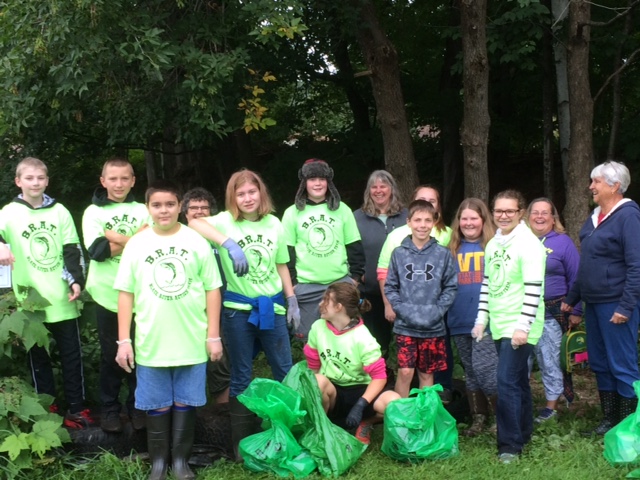
Carmine Guica Young Historians: With the state having changed the curriculum for social sciences, we’ve been very busy working with teachers at Cavendish Elementary as well as Green Mountain Union High School (GMUHS) preparing lots of new programs. We start with RiverSweep, a joint activity of CHS, Black River Action Team, CTES 6th graders and the town. Stewardship is something we foster throughout the year, particularly with our 6th grade. The T shirts they receive from BRAT for helping to clean and maintain the river, are often worn on other outings such as cemetery cleaning, laying flags on veterans’ graves etc.

Board member, Bruce McEnaney has wanted for years to take the kids on the Foliage Train. On Oct. 16 (Wed) we will be taking the 4th grade students on a guided tour where they will learn a lot about how and why the towns developed, the impact the railroad had and much more. We are working closely with Green Mountain Railroad who has offered a special discounted price for adults who wish to join us that day. If interested please call 802-226-7807 or e-mail margocaulfield@icloud.com

Solzhenitsyn:. Recently public access station, Okemo Valley TV filmed the CHS Solzhenitsyn exhibit. This is available at their website as well as being aired on Comcast TV. VT Digger has also posted an article
Solzhenitsyn’s Adopted State Marks his 100th.

An evolving calendar for the months ahead includes:
• September 7-8: Reading Solzhenitsyn: An International Conference Margo Caulfield will be speaking on Sept 7 as part of the program for teachers. Her talk will be “The Stories behind the Quotes: Using Solzhenitsyn's Writings for 21st Century Students.”

• October 15: Publication of “Between Two Millstones,Book 1.”  Fast-paced, absorbing, and as compelling as the earlier installments of his memoir The Oak and the Calf (1975), Between Two Millstones begins on February 12, 1974, when Solzhenitsyn found himself forcibly expelled to Frankfurt, West Germany, as a result of the publication in the West of The Gulag Archipelago. Solzhenitsyn moved to Zurich, Switzerland, for a time and was considered the most famous man in the world, hounded by journalists and reporters. During this period, he found himself untethered and unable to work while he tried to acclimate to his new surroundings. There are passages on Solzhenitsyn’s family and their property in Cavendish, Vermont, whose forested hillsides and harsh winters evoked his Russian homeland, and where he could finally work undisturbed on his ten-volume history of the Russian Revolution, The Red Wheel.

• November 15: Vermont Historical Society at the University Heights South, Room 133.  Presentation by Margo Caulfield “I Wrote and Waited": Aleksandr Solzhenitsyn’s Life in Cavendish, VT

• Margo will also be doing a presentation for the Oshler Center for Life Long Learning at Dartmouth. Date to be announced.

• The Solzhenitsyn exhibit continues at the Vermont Historical Society Museum in Montpelier until October 20.

SAVE THE DATE
Sept: 9 (Sunday): Annual Phineas Gage Talk & Walk-Met at the Museum at 2 pm. Wear comfortable walking shoes. The accident site is a little over ¾ of a mile from the Museum

Oct. 7 (Sunday): 1st Peoples of Cavendish Talk will focus on the earliest occupants of the land, dating back 11,000 years ago. It will include a discussion of how North America became occupied and evidence of first occupation in Cavendish. The talk begins at 2 pm.

HOW YOU CAN HELP
If you can help with any of the following, please contact CHS margocaulfield@icloud.com; 802-226-7807 or PO Box 472, Cavendish, VT 05142

• Baby Boomers: Recently CHS acquired a fan from the 1950s and it has sparked a conversation that we have far more examples of life in 1800s Cavendish then we do from more recent times. If you have items you would like to donate, CHS is working on a “Life in Cavendish-Baby Boomer Style.”

• CHS is looking for new board members as well as volunteers who can help with various activities.


Tuesday, August 14, 2018

CHS Newsletter Summer 2018


BLUEBERRY PICKING

As Cavendish Historical Society (CHS) board member Bruce McEnaney notes, “the best blueberries are the ones you pick yourself.”  He should know as for the last four summers, Bruce and his wife Betty have opened up their blueberry patch to the public in order to help raise funds for the Carmine Guica Young Historians program at the Cavendish Town Elementary School (CTES). These funds have helped to pay for the sixth graders to go to Sturbridge Village and more.

While the season lasts, pick organic berries ($3 a pound) at the McEnaneys blueberry patch is located at 354 Miner Rd. just over the Cavendish line in Chester. It's  off Smokeshire, which is off route 103. Thank you Bruce and Betty for your ongoing generosity

UPCOMING EVENTS

September 9 (Sunday): Annual Phineas Gage Walk and Talk, 2-4 pm. The “talk” begins at 2 pm at the Museum and will be followed by the walk to the scene of the accident, with stops at the site of the boarding house where Gage stayed as well as the surgery of Dr. Harlow.

October 14 (Sunday): Last day the Museum is open for the season. Program to be announced.

WILMA & THE TIMBER RATTLER

We were recently invited to the home of Janet Pipkin, who  has since moved to Maine, to see if there were some items we’d like for the Museum. While we found some real treasures for our upcoming Life in Cavendish: Boomer Generation, more to follow on this, board member Bruce McEnaney discovered a copy of “The Word for the Week,” July 9-15, 1974. In it was a story featuring Dr. Eugene Bont, who practiced medicine at the Cavendish Health Center for 30 years-1957-1988. 

Being bitten by a full fledged poisonous timber rattlesnake is no bowl of blueberries, as Wilma Laitinen of Ludlow will tell you, so understandably she was somewhat miffed recently when she read a story in another publication which casts some doubt on the seriousness of her encounter with the realer of if in fact the snake was a rattler at all!

It all began on a summers day in 1961, “up behind Benson’s on West Hill” in Ludlow where Mrs. Laitinen her daughter Diane, Mrs. James Milnes and her sons, Jeff and Jim were blueberrying. Just before crossing a stone wall, the berry pickers noticed a coiled snake sunning itself but paid little heed since there was a lot of snakes on West Hill. Leading the way Wilma had just started over the wall when the snake lashed out sinking a fang into her leg just above the ankle. Now Mrs. Laitnen isn’t prone to be afraid of much of anything so instead of becoming panicky she yelled at lot at the varmint for its audacity and then took her time about finishing up the berrying and getting home. In fact, it was almost six hours before she decided she was feeling too darned peculiar to be well and decided it might be a good idea to go down and see Dr. Bont in Cavendish. Wilma didn’t know it at the time but she had already been mighty lucky and was to even get luckier during the next few hours. Dr. Bont treated her and then called Burlington where a poisonous snake specialist from Texas named Dr. Parish happened to be at the time. She was immediately taken to the Springfield Hospital and shortly afterward Dr. Parish flew in from Burlington with anti venom serum. By all account’s Wilma had no right to be alive by this time, say nothing of being alert enough to wisecrack with the doctors, but the specialist from Texas had an explanation. It was his opinion the snake had recently eaten and therefore had released some of the venom into its food, which is normal. However, there was no doubt that Mrs. Laitnen had indeed been bitten by a timber rattler for Dr. Parish had allowed himself to be bitten by a critter of the same heritage only a few weeks before and his reactions to the bite were identical to those of our heroine.

Wilma’s advice to berry pickers and others who roam Vermont’s fields and forests,” Feed a snake today today-sometimes it’s hard to tell the good guys from the bad guys.”

As a follow up to this story, we contacted the Bonts, who remembered Wilma with fondness, recalling how she was so helpful to the older members of the community.  To learn more about this incident, we contacted the Agency of Natural Resources. Jim Andrews of the Agency of Natural Resources who provided the following information:

We have that bite record in our database. It looks like it was a venomous snake bite and Dr. Bont corresponded with us directly about it (see below). The date according to the Rutland Herald (August 22, 1959, Vol 106, No 201) was 1959. The bite victim was Mrs. John Laitinen. According to the paper, they were picking blueberries on West Hill. Dr. Bont remembers it as Okemo Mountain.

It was the only venomous snake bite that he or any of his colleagues in that area had ever heard about. They assumed rattlesnake only because that was the only known venomous snake in the state.

Since we have no other reports of this species anywhere in that area, we don’t consider this a current population and we wonder if it was even an historic population. Any reports over 25 years old are considered historic. Snakes occasionally get moved around in hay, old cars, pieces
of equipment, etc. The other likely venomous snake is Copperhead, but that snake would have had to have been brought in from further south. Even garter snakes can occasionally generate a reaction in sensitive people, but the bite pattern should have ruled them out. Racers rattle and we have one other historic report from that area, but they should not generate a reaction. Milk snakes rattle frequently, would have been there, but again, they should not have generated a reaction.

Rattlesnake antivenin would not help with the bite of other snakes. According to the reports in the paper they seemed unaware that rattlesnakes can control the amount of venom released. Between 25% and 40% of bites are dry bites that contain no venom at all. Dr. Bont did not see any hemolysis, which he should have seen if venom was injected, but he did mention other symptoms that suggest envenomation.

At the remaining two locations where we know we currently have Timber Rattlesnakes we get multiple reports and photos of sightings every year.

So, the snake could have been among the last surviving rattlesnakes in that area, it could have been accidentally transported, or it could have been another transported species (Copperhead).

Here is Dr. Bont’s letter.

Elizabeth Cillo (working for us) contacted Dr. Gene Bont, and he wrote her back on November 6, 2000. His letter read as follows:

Dear Ms. Cillo:
Sorry for the delay in answering your letter, but it took some time to recall the details of the snakebite involving Mrs. Laitinen.

To my best memory, she was hiking on Okemo Mountain and some of her party came across a snake. She tried to get the snake to move with a long stick, but he attacked her and bit her in the leg. She was concerned because she was quite sure it was a rattlesnake and shortly afterwards felt lightheaded and a feeling of not being well. She was brought down to my office where on examination there were the four marks typical of a rattlesnake bite. There was mild redness and swelling. Because of the nature of the bite, she was hospitalized fearing neurological and hematological consequences. I called the state health department as I had been in practice for many years and had never had a snakebite incident and no one else in the hospital recalled such an incident either. As it happened there was a public health person from Florida whose specialty was venomous snake bites. Within a few hours he drove down with someone from the health department to Springfield Hospital and examined her. By this time we had done blood tests and there was no evidence of hemolysis going on and after careful examination, it was his conclusion that it was indeed a venomous snakebite. From her description of the snake and knowing that a timber rattler was the only venomous snake in the area, his conclusion was that the snake must have eaten and pretty much emptied its venom before she was struck. She had some paresthesias of numbness and tingling in the extremity, but no serious effects were noted. She was kept for observation for 48 hours and was released. This is the only such episode I have ever been involved in.

I’ll give you a call to let you know this letter is coming as I read about Dr. Andrews research in the newspaper and was really curious about it so this adds a good deal of interest on my part.

Thanks for your letter and again my apology for late return.

MEDITATIONS ON MY 105TH BIRTHDAY FEB. 7, 1964

James E. Gay was originally a school teacher and didn’t move to Cavendish until 1890, though his family had started the Gay Brothers Mill in 1886. In 1902 his brother Stearns Gay, who was president of the mill, died leaving James the guardian of his three children, Leon, Olin and Vernice as their mother Alice had died in 1895. Besides being treasurer at the Gay Brothers Mill, he was also Secretary, Treasurer and General Manager of Cavendish Electric Light Company. The president was Olin D. Gay and Vice President was Mertie A. Gay. Power was purchased from the Claremont Power Company.

James retired from the Mill in 1922 and died in 1965 at the age of 106. Below is a poem he wrote in honor of his 105th birthday.

Thank you to his great great niece, Sue Beyer, who sent his poem to CHS.

1. This is the day I long have sought
And mourned because I almost thought
I would not pass the crucial test
And be left alone at last to rest.

2. My grit has stayed by like it should
I’d walk again now if I could,
But I am told to use my chair
To save my head—if not my hair!

3. Now the day has come and gone,
My friends returned each to his home;
While I sit quietly by my typewriter
To show the world I’m still a fighter.

4. I sit and think to improve my mind,
Don’t bother my housekeeper all the time.
I still enjoy all kinds of wishes
But long since gave up wiping dishes.

5. I think of some Alumni to write
To see if any of them “Got Tight.”
On This, to me, EVENTFU DAY
When they met with me, they said, JAMES GAY.
6. You See I never drink or smoke,
The taste of either would “Get my Goat.”
I’ve had so many bids to drink,
But refused and said, “You Stop and Think.”

7. In college I never entered sport,
But spent my spare time just at work
To earn enough, my way to see
Through NEW HAMPSHIRE UNIVERSITY.

8. In passing by the Bakers’ shops,
I’d often stop and lick my chops;
Wishing I could take one cake,
To ease my constant “Hunger” ache.

9. That’s my story at ONE HUNDRED AND FIVE;
I’m a lucky man to be alive!


BECOME A MEMBER, RENEW YOUR MEMBERSHIP, DONATE

If you have not joined the Cavendish Historical Society, need to renew your membership, and/or would like to be a volunteer, please complete the form below and sending a check, payable to CHS, to CHS, PO Box 472, Cavendish, VT 05142. All contributions are tax deductible.

Name: _______________________________________

Address: _______________________________________________


Phone Number: _____________________    E-Mail: ____________________________
Membership Level
__ Individual Member $10  ___ Senior Member 65+ $5  ___ Sustaining Member $500
__ Household Member $15  ___ Contributing Member $250                            

Volunteer
___ I would be interested in serving, as a volunteer .I would be interested in serving on the following committee(s):__ Program Planning          __ Fundraising    __ Building (Museum)
__Archives                       _ Budget           ­­–– Cemetery    __ Carmine Guica Young Historians

Donations are always welcome and can be designated as follows:
__ For general purposes                   __ Young Historians                  __Publications
__ Archeological Activities                _ Museum & Archival             __ Special Events
__ Rankin Fund                             __  Williams Fund                             __ Solzhenitsyn Project
__ Other (please specify)                   __ Cemetery Restoration           __ Preservation Projects