Tuesday, September 22, 2020

CGYH-October Events/Activities/Resources

 CHS has started a new program to support our in school and home learners. The Carmine Guica Young Historians is posted on or about the 25th of each month to support parents, teachers and students with information about upcoming events and dates of historic interest with related activities and resources. If you would like to receive this by e-mail, send an e-mail to margocaulfield@icloud.com with "subscribe CGYH" in the subject heading.


Happy first day of fall! Below are events, activities and resources for the month ahead.

Oct. 12 (Monday):  Indigenous Peoples Day in Vermont (formerly Columbus Day)

 Oct. 14 (Wednesday): Cavendish Charter signed by King George in 1761. Capt. John Coffeen, Cavendish’s first legal settler helped to draft the VT Constitution, which he signed on July 8, 1777. There is a good article in VT Digger about Gov. Wentworth and how he illegally sold off Vermont land.

Oct. 31 (Saturday):  Halloween & Day of the Dead (Dia de Muertos) is a cross quarter day,” marking the midway point between the autumn equinox and winter solstice. Called Samhain (“sow-win”), or summer’s end, in Ireland, this is a Gaelic festival marketing the end of the harvest season and the beginning of winter or the “darker half” of the year. This is the day that barriers between the physical world and the spirit world break down, allowing more interaction between humans and those who have passed. It was expected that ancestors might cross over during this time as well, and Celts would dress as animals and monsters so that fairies were not tempted to kidnap them. Eventually, Oct. 31 became known as All Hallows Eve or Halloween, and many of the customs adopted in 19th century America came from Irish immigrants.

Dia de Muertos (Day of the Dead) is celebrated throughout South America, though it is most associated with Mexico. The traditions mix Christian influence with ancient Indian (Mayan, Aztecs, Incas, Kichwa ) practices. Like the Irish and other cultures, they believe this is the time when the veil between this world and the next is lowered. Many parts of South America celebrate the day by remembering loved ones who have died by making altars (ofrendas) with special flowers, food and drink, pictures and special objects associated with a departed friend or family member. It is a positive honoring of the dead and it involves going to church, cleaning cemeteries and visiting with friends and family. In Guatemala, giant kites are constructed and flown in the cemeteries.


Resources/Events for October Events
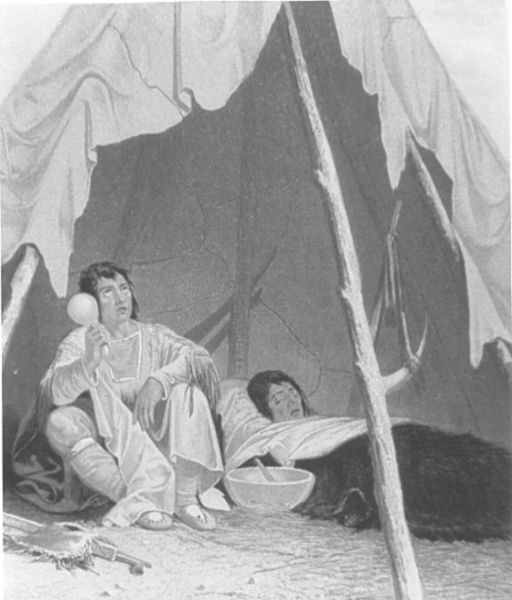

  • Oct. 11 (Sunday) From Smallpox to Covid-19: The Impact of Pandemics/Epidemics on the Indigenous Peoples of the Americas. This will be at 2 pm at the Cavendish Stone Church. Admission is free. Covid protocols required. Not suitable for young children.
  • Resources for Indigenous Peoples Day

- “Before Columbus” by Charles Mann. The children’s version of Mann’s award winning book “1491.” Contrary to what so many Americans learn in school, the pre-Columbian Indians were not sparsely settled in a pristine wilderness; rather, there were huge numbers of Indians who actively molded and influenced the land around them. The Aztec capital of Tenochtitlan (Mexico City) had running water and immaculately clean streets, and was larger than any contemporary European city. Mexican cultures created corn in a specialized breeding process that it has been called human’s first feat of genetic engineering. Indeed, Indians were not living lightly on the land but were landscaping and manipulating their world in ways that we are only now beginning to understand.

- “Calico Captive” by Elizabeth George Speare is a historical fiction children’s book that is heavily based on the diary, “A Narrative of the Captivity of Mrs. Johnson.” The birth of her child, “Captive” took place in Cavendish and the stones she erected to mark this event, were relocated to route 106 in Reading. Provides a very interesting perspective about how they were treated by the Abenaki (much better than the French or English). Interestingly, we have researched the path the family took and it’s close to the same path we take to the archeological dig at the Bruckner Preserve (Poultney and Lake Champlain intersect). A timeline of this event is at the CHS blog. The book should be available from the Cavendish Library. We can do a reading group and visit both the site of the stones as well the birth place.

- What Really Happen While a cartoon and quite short,  it accurately depicts Columbus and his activities. May not be appropriate for younger students. A great navigator he may have been, but he was no humanitarian. He was actively involved in the slave trade and very much disliked in his own time. 


- Talking sticks. Have beads and other materials that can be used.

- There are four bands of the Abenaki in Vermont. The Elnu is the tribe that covers southern VT, including Cavendish. .

- Timeline for first peoples in VT


  • Hands on History Kits: Kits include all directions, materials and information about the project. Unless otherwise arranged, kits can be picked up at the CHS Cabinet, located next to the Museum stair.

- Indigenous Peoples Day- Directions and materials to make a talking stick. Please pre order. Kits will be left in the CHS Cabinet with your name on it.

- Dia de Muertos: Kit includes a sugar skull to paint and/or decorate (can be female); a simple papel picado (paper cuts), and directions and materials to make a paper flower. If you would like a kit for your family or a number of students, please let me know as soon as possible as I need to make the sugar skulls. A handout will be included that provides lots of information from building an altar to customs practiced in other countries.

  • Proctorsville Ghost Walk: There are a lot of haunted places in Proctorsville. We generally do this walk with the CTES fifth grade but can do a special evening haunted walk for remote learners if there is interest. Also tell Abenaki ghost tales so a good way to incorporate both Indigenous Peoples Day as well as Halloween.


  • Other Resources

           - Smithsonian Dia de los Muertos (Day of the Dead): Latino Virtual Museum 

           - Mexican Day of the Dead from the British Museum Helpful for adults to understand the tradition and customs 


            - Coco Winning both the Oscar and Golden Globe, this animated film captures Dia de Muertos. The only part that is not accurate is the spirit animals. These are not a traditional part of the holiday but rather reflect a famous Mexican artist. The film is available on Netflix. 


            - The Halloween Tree: Based on the Ray Bradbury novel of the same name. Bradbury also narrates the film, which covers many of the traditions associated with this time of year. It is currently being redone but love the original. The film is a little over an hour long. The Cartoon Channel generally shows the film.


As always if you need a special program for your class or home learner(s), please don't hesitate to contact me.


Tuesday, September 1, 2020

CHS Briefs September 1, 2020

 UPCOMING EVENTS: Note all in person events require attendees to wear a mask and practice social distancing. All Sunday events begin at 2 pm.


Sept. 13 (Sunday):
Annual Phineas Gage Walk & Talk. We will walk to the site of the accident, approximately ¾ of a mile from the Museum, as well as visit the site of his boarding house and Dr. Harlow’s Surgery.


Sept. 17 (Thursday): Constitution and Citizenship Day. We had been planning a town wide trivia contest for that day, but Covid had other ideas. Celebrate this date by seeing how well you do on the practice Citizenship test.


Oct. 11 (Sunday): From Smallpox to Covid-19: The Impact of Pandemics/Epidemics on the American Indigenous Peoples. This will be an outdoor presentation weather permitting. In the event of rain or cold, the event will be held at the Cavendish Stone Church.


Nov. 8 (Sunday): Epidemics/Pandemics & Their Impact on History: The talk, will be done via Zoom in collaboration with Okemo Valley TV. There will be plenty of time for questions & answers.


NEW FROM CHS


Cares Closet:
Thank you, thank you, thank you to Dave Gallagher and Ana, who once again knocked it out of the park. They have built a cabinet, from recycled objects. Open the doors and pick up a mask (cloth or surgical), books (children and adult), DVDs, CDs and information. Lift the chest lid for puzzles, games, hands on history projects, craft supplies, toys and more. Installed next to the steps of the Museum, everything is free for the taking.


A few ground rules:

-       Please close all doors and the lid of the chest after use

-       Do not leave anything there. If you have something you wish to donate, please e-mail margocaulfield@icloud.com or call 802-226-7807.

-       Be Covid smart and use hand sanitizer before and after using the Cabinet.


CARMINE GUICA YOUNG HISTORIANS PROGRAM: To help both teachers and our expanded at home learning community, we have recently launched a digital e-mail digest-the Carmine Guica Young Historians Update (CGYHU). Posted on the 25th of each month, it provides information on town, state and national history for the month ahead. If you are interested in receiving the CGYHU, please send an e-mail to margocaulfield@icloud.com with “subscribe CGYHU” in the subject heading.


Our first program will be on September 8 (Tuesday), where our home learners will learn about the brick buildings in Cavendish Village by making bricks. CTES 5th & 6th grades will be participating in RiverSweep the morning of Sept. 15 and our home learners take on another stretch of the river in the afternoon.  We will once again be celebrating Constitution and Citizenship Day with the 5th grade.


Thursday, July 23, 2020

What Epidemics/Pandemics Have in Common

On July 12, the Cavendish Historical Society (CHS) hosted a talk on Epidemics/Pandemics and their impact on history. As a follow up to this talk, below is an article on the characteristics common to these events.

In honor of Indigenous Peoples Day, CHS will be hosting a talk on the impact of the small pox epidemic that killed close to 90% of the Native Americans. We are also planning to repeat the Epidemics/Pandemics talk by Zoom in November.


The pandemic began in the East, sweeping through cities and towns, disrupting daily life and sowing fear and uncertainty throughout much of the known world. 

Sound familiar? However, it is a description of the Antonine Plague, which lasted for 15 years during the 2nd century.

Whether it was small pox, measles or a combination of the two is unknown, but the reaction of people then, during the Black Death (Plague), the small pox epidemic that killed almost 90% of the indigenous Americans, the flu pandemic of 1918 and even Covid-19, are surprisingly similar. After all, they have the same common denominator, humans.

While Covid hasn’t caused anywhere near the deaths of plague (the number one pandemic killer) and other epidemics, it’s impact on society and culture will be just as significant.   

Below is a list of 10 characteristics these type of events share.

1. Panic & fear result in fight, flight, blame, despair, and cruelty. As much as possible, people flee where the outbreak is happening to a place perceived to be safer. Unfortunately, this helps to spread disease.  

Jews being tortured and killed during the Black Death
They also will “fight” in an effort to have some sense of control over a situation that is very much out of their control. This can have disastrous consequences, such as the burning down of the Jewish ghettos during the Black Death. During the Antonine Plague in Rome, people smeared thin needles with infected fluids and tried to stab their victims unnoticed. When they contracted the disease, it was hoped nobody would suspect foul play. The plague literally allowed unscrupulous people to get away with murder.

During the small pox pandemic, Native Americans, like the ancient Romans, looked at it through the lens of their gods and cosmologies. The belief that their gods had forsaken them caused some to commit suicide.

The outbreaks of plague in Renaissance Europe sparked rumors of malicious plague spreaders, thus focusing on a wide variety of insiders and outsiders from high-ranking officers and doctors to the lowest levels of health workers – plague cleaners, cartmen and gravediggers– were singled out, accused of perpetuating the disease for a variety of reasons including self-interested gain.

As recently as the HIV/AIDS epidemic, hate and fear were engendered against what became known as  the five H’s-homosexuals, heroin addicts, Haitians, hemophiliacs and hookers.

These type of events can cause societies to break apart, scapegoating immigrants, minorities and others who are thought to be suspicious. The poor will often revolt and cruelty abounds.

However, certain factor can mitigate these reactions. The 1918 Flu pandemic and the flu of 1831 that swept through Paris did not lead to any recorded social violence, blaming or hatred. In both cases, there were other major factors at play-WWI in 1918 and the July Revolt in 1831.

While the extremes seen in past epidemics/pandemics are not as pronounced during Covid, they are none the less at play and concerning to many. Without normal routines and jobs, dwindling finances, the mandates to “stay at home” and reduce travel,  combined with fear and anxiety, people can act in ways they normally wouldn’t. The recent influx of calls to suicide hotlines, protests, riots as well as a fierce “cancel culture,” are very much in line with how people respond during pandemics.

Christians helping the sick during the Antione Plague
This does not mean that good does not occur during these events. The Christians during Antonine Plague converted many to their beliefs as they saw how they cared for the sick. Today, many individuals and communities have done an incredible job making sure people are safe and have access to food and care.

It’s not surprising that people are more concerned about the damaging effects of the pandemic rather than the incredible contributions many are making. Our brains are wired for a negative bias, as remembering threats to safety and well-being were key to early human’s survival. 


2. People act in their own interests. In the most extreme situations, such as the Plague, surrounded by death and suffering, inevitably people begin to question the rules of law and morality. During the 1918s, there were "anti-mask" meetings. When there was a polio outbreak in Vermont in 1917, and quarantine was ordered, a civil suit was filed  by Community Chautauquas. Today there are groups who believe mask wearing is a civil liberties issue with little regard to public health.

3. Scammers abound. The more risky the situation the more snake oil salesmen surface. With the Internet, they're having a field day at the moment.

Glycon Statue
Alexander of Abonutichus started the cult of Glycon in the 2nd century. A mystic, magician and charlatan, he literally was pedaling snake oil. He created Glycon, a snake god, that was basically a glove puppet. Among his sales items was a charm that could be hung over the door to your house to protect you from plague. Turns out those who had the plaque over their threshold were more likely to die from the plague, probably because they went about business as usual thinking they were protected.

4. Misinformation abounds. Causes, treatments, cures are all over the map. Many do not take the time to separate fact from fiction and untold damage is done by misinformation and the spreading of it.

 As seen in 1-4, the humans can treat each other terribly. As Marcus Aurelius, Roman emperor,  noted in the 2nd century, however bad the physical disease surely was, one thing was even worse-the mental plague of corruption, vice and moral decay.

5. The health impacts won’t be known for decades. “Look back” studies show that those that had the flu of 1918 as children had considerably more health issues as adults then non infected contemporaries. Interestingly, flu survivors were less likely to get cancer. You can't get shingles unless you had chicken pox at some point. On the plus side, descendants of plague survivors seem to carry a gene that made them more likely to be “non progressors”-don’t develop full blown disease- when they contracted HIV, the virus that causes AIDS.

6. Most at risk are those living on the margins: The reasons are varied but can include: inability to escape from where the pandemic is occurring; poor living conditions, including overcrowding and dense pack; more likely to have other health issues; malnutrition; no access to information due to language and literacy barriers; and discrimination.

Depending on the epidemic certain groups will be more at risk than others. In the 1918 flu, the most at risk group were young adults, particularly those in their twenties and thirties. Pregnant women were at particularly high risk. The death records for Cavendish show that at least two women who were pregnant died during the 1918 flu pandemic.

7. Every storm runs out of rain (Maya Angelou) Pandemics/epidemics don't last forever

8. Change follows. The Antonine plague was the beginning of the fall of the Roman Empire while at the same time ushering in Christianity. The black death of the middle ages made the Renaissance possible. It also paved the way for
- literacy (all the clothes that were left could be turned into paper)
- a middle class (they needed a work force and the serfs demanded a living wage)’
- the beginning of the shift from the “old scholars” approach to medicine to empirical based evidence.   

The flu of 1918 made major changes in health care in the US and historically, because of the damage it did to President Wilson, the treaty of Versailles laid the foundation for WWII.

Protesting that lead to FDA changes
The AIDS epidemic revolutionized health care, from new means of treatments for cancer and other diseases, to how the FDA fast tracks drugs and allowing compassionate use. It also ushered in the age of HIPAA and confidentiality.

We’re only at the beginning of how this pandemic will change our culture and society, but already we are seeing a lot more people telecommuting. Businesses are learning that it's cheaper for them to have their employees telecommute so office buildings are being closed. There are those that prefer remote learning and so a hybrid approach to education is potentially here to stay. Thanks to forecasting and remote learning-snow days may be a thing of the past. Masking will become part of flu season etc.

9. All of this has happened before. And will happen again As noted by Marcus Aurelius,—the same plot from beginning to end, the identical staging.

10. No matter the situation-war, extreme loss, devastation, crisis-the number one response of the humans is resiliency. This is true across the board for all cultures. It's wired into the human DNA. It would have to be because of reactions 1-4.


Tuesday, June 30, 2020

Scribbler II-Summer 2020


CAVENDISH IN THE TIME OF COVID

Due to Covid-19, and Stay at Home orders, we were unable to provide a spring newsletter. However, we’ve been collecting stories and information, which will be archived for future generations. We’ve also been posting special Covid related articles to the Cavendish Historical Society Blog (URL above).

We’re having to adjust to new ways of doing things. Consequently, the Museum is only available by appointment (numbers above) and those coming must adhere to Covid prevention protocols-wearing a mask, physically distancing, coughing into your elbow, hand washing and staying home if not feeling well.

July 12 (Sunday): Epidemics & Pandemics: Their History and Their Impact; 2 pm at the Cavendish Historical Society (CHS) Museum. This talk is in memory of Phyllis Bont who worked in two epidemics- polio and AIDS.

August 9 (Sunday): Program to be announced.

September 13 (Sunday): Annual Phineas Gage Walk & Talk, 2 pm at the Museum

October 11 (Sunday): Last day the Museum is open for the season. Indigenous Peoples Day Program.


REMEMBERING PHYLLIS BONT


It is with deep sadness that we report the passing of Phyllis Bont on June 6. In March 2018, Phyllis was among the first group of women we honored during March (Women’s History Month) with what has become an annual feature-“Cavendish Women You Should Know.”

Phyllis Flint was born in Grand Rapids Michigan. Attending Wayne State in Michigan and Butterworth Hospital in Grand Rapids. Phyllis became a nurse and married the love of her life Dr. Eugene (Gene) Bont, whom she had known since she was 4. They came to Cavendish in 1957.

Raising seven children, along with providing foster care and entertaining many of the neighborhood kids, she also served the critical role of the “country doctor’s wife.” When Dr. Bont recognized the critical need of the physician’s assistant (PA), Phyllis worked  with him, the VT Medical Society, the VT State Legislature and Springfield Hospital to design a program that would allow PAs to work at an unprecedented level of independence in a community setting and to get the Vermont Physician Assistant Practice Act passed. A corresponding Act for Nurse Practitioners (NPs), made it possible for Phyllis to become one of the first registered nurse practitioners (RNP) in the state. While she had pursued  the degree to expand her knowledge as a home health nurse, she ultimately joined Dr. Bont at the Black River Health Center. Together, they moved to Albany, NY, where she worked as an RNP for the Albany Medical Center’s Family Practice program, seeing patients, and teaching/mentoring residents and future RNPs.

Upon retirement to Cavendish, Phyllis embarked on a second career as a full time weaver/fiber artist. She was one of the founders of Six Loose Ladies, creating weavings as well as teaching the skill to others. The gorgeous shawls and scarves she made where her way to continually “wrap someone in loving kindness,” as she liked to say.

In the last few years we have been grateful for the many hours Phyllis donated to CHS by answering questions and sitting through countless interviews. She gave us much needed information on a number of topics and she put an end to the local lore about Mr. Hickernell. No, he is not buried in the basement.

A last thank you to Phyllis and Gene. Not only was it one of the great love affairs to witness, but you made our community stronger and healthier during the 63 years you lived here. We miss you and regret we will no longer be able to call, or stop by, and say, “Do you know anything about…”


CAVENDISH & VERMONT FLU PANDEMIC 1918

In the midst of Covid-19, we’ve been asked how Cavendish weathered the flu of 1918. Where there many deaths?

There aren’t diaries and other resource documents to look through, which is part of the reason we are asking people now to keep journals and share with CHS so that future generations will know how things were in Cavendish during the Covid pandemic.

Just as this past January, where the media was obsessed with presidential impeachment hearings, so too was the focus on World War I (WWI) when the first cases of flu were reported from Kansas.

Incorrectly labeled the “Spanish Flu,” Spain was not involved in WWI conflict so their media was free to report on it, hence the name. There is evidence, however, that the flu actually started in Haskell, Kansas.

Haskell farmers raised hogs. “The county sits on a major migratory flyway for 17 bird species, including sand hill cranes and mallards. Scientists today understand that bird influenza viruses, like human influenza viruses, can also infect hogs, and when a bird virus and a human virus infect the same pig cell, their different genes can be shuffled and exchanged like playing cards, resulting in a new, perhaps especially lethal, virus.”

We cannot say for certain that that happened in 1918 in Haskell County, but we do know that an influenza outbreak struck in January, an outbreak so severe that, although influenza was not then a “reportable” disease, a local physician named Loring Miner…went to the trouble of alerting the U.S. Public Health Service. The report itself no longer exists, but it stands as the first recorded notice anywhere in the world of unusual influenza activity that year. … Several Haskell men who had been exposed to influenza went to Camp Funston, in central Kansas. Days later, on March 4, the first soldier known to have influenza reported ill.  John M Barry, Smithsonian Magazine November 2017 At Camp Funston in March of 1918, in three weeks, over 1,100 of 56,000 troops were admitted to the hospital and 38 of them died.

On Sept. 21, 1918, Charles Dalton, secretary of the Vermont State Board of Health, ordered local health officers to report any influenza cases. While the state’s newspapers carried his warning that the epidemic would reach Vermont in the coming days or weeks, the flu was already here. At the same time the papers posted Dalton’s warnings, they were also including that 40 students at Middlebury and 60 at Norwich University were already sick from it.  More than 50,000 Vermonters would contract the flu and more than 2,100 would die.

As we have seen Vermont’s government struggle with closing down schools during the Covid-19 epidemic, their predecessors had the same fears. The 1918 Governor, Horace Graham, wrote to Dalton on Sept. 26, “Do you not think some general action ought to be taken by the Board with reference to this epidemic. If it is contagious what about permitting all these conventions and meetings(?)” The Governor had other issues to consider as he was worried what effect banning gatherings would have on the sale of Liberty Bonds for the war effort.

Dalton issued an order to local health officials stating they had the right to close schools, churches, and other places of public assembly. Note that the state was leaving this in the hands of the health officers. Dalton also stated, “Health officers should make it plain to all persons that the disease is spread by coughing and sneezing in public or around other people.”

Funerals were allowed, though if you were sick you couldn’t attend. The massive numbers of deaths took precedence over war news.

Finally, on Oct. 4, Dalton ordered the type of “stay at home” order we experienced from March through May, as he ordered all schools, churches and theaters closed, and prohibited all public gatherings. The ban was lifted on Oct. 31.

Just as scammers are quite active during Covid-19, the charlatans of their day promoted Dr. Williams’ Pink Pills to “ease the stress of families of the ill.” A clothier in Barre insisted everyone needed a raincoat as dampness was linked to illness. Vick’s VapoRub was another cure all being promoted.


Global travel as we know it today, did not exist then. However, because of WWI, the troops brought it with them and it quickly spread throughout the United States, Europe and the rest of the world.

The flu came in three waves with the first in the early months of 1918, the second in the fall of 1918 and the third in early 1919. Of the three phases, the most-deadly was the second wave.
According to the Vermont Historical Society, First noted in reports coming from Fort Devens, Massachusetts, where American troops were assembled for transport to Europe to fight in World War I, the disease quickly spread into Vermont through the transportation centers of St. Johnsbury, St. Albans, White River Junction, Rutland, in the more densely populated communities of Burlington and its neighboring towns, and—most severely hit of all—Barre and Montpelier.

The disease typically ran its course in three weeks, but could kill victims in three days or less. Without the aid of antibiotics or antiviral medicines, physicians were unable to treat cases of flu or its complications, most frequently pneumonia. They were therefore reduced to making diagnoses, treating symptoms, and recording the cause of death. Newspapers carried advertisements for patent medicines, none of which was truly effective in preventing or curing the flu. Makeshift clinics were assembled in churches, libraries, and other buildings. The hospitals in Barre and Montpelier hastily constructed new wings or added a floor to accommodate the flood of patients. In Burlington, the mayor took the unusual and controversial step of opening a dispensary where flu victims with signed notes from their doctors could acquire carefully measured quantities of alcoholic beverages, thought to be a preventative medicine. A critical shortage of doctors, nurses, and medical facilities developed by mid-September, so that Vermont Governor Horace F. Graham turned down the desperate call of Massachusetts Lieutenant Governor Calvin Coolidge for doctors from Vermont. The senior class of medical students at the University of Vermont was pressed into field service; newspapers called on healthy and capable women to take on nursing duties.

By the end of September and into early October, town medical officers began exercising their authority to close all public meeting places—schools, churches, places of entertainment—and a statewide ban on public meetings went into effect. The Vermont Supreme Court, after postponing its October term several times, finally cancelled it altogether. Middlebury College was quarantined, and the University of Vermont postponed opening its autumn term.

The flu subsided in November—just as World War I came to an end—but scattered and less severe outbreaks persisted into February 1919. Statistics reported by the Board of Health for 1918 show the devastation. In a state with a population of 355,956 in the 1910 census, there were 43,735 cases of influenza in 1918, resulting in 1,772 deaths. The disease thus attacked 13 percent of the population and accounted for 25 percent of deaths for the year. These were approximate figures only, and do not include cases and deaths from pneumonia.

The epidemic had devastating effects on social and family life in Vermont. Because the Spanish flu had the peculiar pattern of fatally attacking people in the middle years, many children were left with one or no parents and were sent off to live with relatives elsewhere. In hard-hit communities, the deaths came so rapidly, in such great number, and under the stress of quarantine, that funeral ceremonies and interments were frequently performed unattended by mourners.

Cavendish was impacted just as much as the rest of the state and country. Of the four Cavendish men who died in WWI, three died from flu. As Barbara Kingsbury noted in her book, “Chubb Hill Farm and Cavendish, Vermont,” The Civilian population was hit hard by “Spanish influenza, too, though it spread the quickest in the crowded Army barracks and camps. The epidemic caused much more suffering on the “home front” than any fuel and food shortages.
 
A review of the town’s death certificates for 1917-1920, for causes listed as influenza, la ’grippe, flu, pneumonia, and/or chronic bronchitis, found at least 15 pandemic flu deaths. As can be seen in Table 1, the age of flu deaths in Cavendish in 1918-1919 reflected a younger age, as well as several women who were pregnant, including one where the child was stillborn and the mother died shortly thereafter.

Table 1: Flu Related Deaths from Flu 1017-1920
Year
Total Deaths
Flu Related
Age Range
Occurred
1917
27
5
41-68
Feb-May
1918
27
6
24-60
1 June 5 Sept-Dec
1919
34
12
Newborn-71
10 Jan-June, 1 Sept, 1 Nov
1920
26
5
4 Mos-79
Jan-April

BECOME A MEMBER, RENEW YOUR MEMBERSHIP, DONATE

If you have not joined the Cavendish Historical Society, need to renew your membership, and/or would like to be a volunteer, please complete the form below and sending a check, payable to CHS, to CHS, PO Box 472, Cavendish, VT 05142. All contributions are tax deductible.

Name: _______________________________________

Address: _______________________________________________


Phone Number: _____________________      E-Mail: ____________________________
Membership Level
__ Individual Member $10                __ Senior Member 65+ $5       __ Sustaining Member $500
__ Household Member $15              ___ Contributing Member $250                             

Volunteer
___ I would be interested in serving, as a volunteer .I would be interested in serving on the following committee(s):__ Program Planning         __ Fundraising        __ Building (Museum)
__Archives                     _ Budget         ­­–– Cemetery    __ Carmine Guica Young Historians

Donations are always welcome and can be designated as follows:
__ For general purposes               __ Young Historians                  __Publications
__ Archaeological Activities                _ Museum & Archival             __ Special Events
__ Rankin Fund                            __  Williams Fund                    __ Solzhenitsyn Project
__ Other (please specify)              __ Cemetery Restoration           __ Preservation Projects