Tuesday, May 9, 2023

Spring Newsletter 2023


PLANT SALE & MUSEUM OPENING

If you receive the Cavendish Historical Society’s (CHS) Monthly Briefs, you already know that a diesel oil spill occurred behind the Museum in April. However, since then,  they’ve started clearing out the contaminated soil and have assured us that we can hold the plant sale there Memorial weekend. So the plant sale will be at the Museum,  May 26 (Friday) 5:30-7 pm for the early bird special and on Saturday, May 27 from 9-noon. 


If you are interested in our special salad buckets ($15) and container tomato plants (cherry, sun gold or Early girl) please order as soon as possible by calling 802-226-7807 or e-mailing margocaulfield@icloud.com. Be specific about the types of tomatoes you would like. 


Because we weren’t sure we could use the Museum, we have programs planned at various locations in town for June. Consequently, the Museum opens on Sundays starting June 25th from 2-4pm. Visits at other times can be arranged by calling or e-mailing. 


UPCOMING EVENTS


May 26 : Early bird plant sale 5:30-7:00 CHS Museum. Orders for container tomato plants (cherry, early girl, sun gold $10) or salad buckets ($15) must be made ASAP using the contact information above.  

May (Saturday): Plant Sale in front of the Museum 9-12.

June 4 (Sunday):  Dan Churchill’s Memorial, 2pm at his former home/business 66 Duttonsville School Dr, Cavendish. All are welcome.

June 11 (Sunday): Talk on Peter Tumbo, the Revolutionary War Veteran and former slave who lived in Cavendish and died at 106. 2 pm at the Cavendish Stone Church on Route 131. Park across the street at the Cavendish Baptist Church

June 17 (Saturday): Cavendish Village Ghost Walk, Meet at the old Duttonsville School 66 Duttonsville School Dr, Cavendish, at 8 pm, wear comfortable shoes and bring a flashlight. 

June 28 (Sunday): Museum opens for the season on Sundays from 2-4 pm

July 29 (Saturday): Town Wide Tag Sale. The CHS) booth will be at the Gazebo on the Proctorsville Green.

Sept.10 (Sunday): Annual Phineas Gage Walk & Talk, 2pm begins at the Museum with the talk. It’s about ¾ of a mile to the accident site. Please wear comfortable shoes.


MEMORIAL DAY: REMEMBERING THOSE FROM CAVENDISH WHO GAVE ALL


 Memorial Day is when we remember those who died while in service to their country. Started as a Civil War remembrance, James A. Garfield, when he was an Ohio Congressman and a former Civil War Union General, stated at the commemoration of Arlington National Cemetery, We do not know one promise these men made, one pledge they gave, one word they spoke; but we do know they summed up and perfected, by one supreme act, the highest virtues of men and citizens. For love of country they accepted death, and thus resolved all doubts, and made immortal their patriotism and their virtue.


Revolutionary War: Soldiers who died in and around Cavendish, particularly on the Crown Point Road, were buried in the Coffeen and  Revolutionary cemeteries and in private graves. 


Civil War: More soldiers died of disease during the Civil War than were killed in battle. Intestinal disorders such as diarrhea, typhoid fever, and dysentery were rampant in the camps, along with various types of fevers, measles, chicken pox, mumps, whooping cough, and small pox. Men who left their home towns for the first time were exposed to new diseases that they had no immunities against. A lack of sanitation and close quarters contributed to the spread of disease, and poor food, lack of shelter, and a lack of proper clothing increased their severity. In the field, a common cold could quickly become pneumonia. Army War College. 


Of the 173 names appearing on the Cavendish civil war memorial: 14 died in battle/wounds, 1 in prison, 13 while in the service from disease); two were lost at sea; one was drown and one was missing in action.

Died from disease: Jesse Adams; Sylvanus S. Barnard; Thomas W. Demary; Henry C. Fletcher; Nathan Graves; Myron Hicks; Chancellor Paige; Otto Rimley; Michael Shannon; Charles Spaulding; George Taylor; William Webster; Henry P White

Died in Battle or from wounds: Joseph Ashley (Gettysburg); Zaccheus Blood (Winchester); Henry G. Fillebrown (Petersburg); John Quincy French (Wilderness); John L. Hemenway; Horace Needham (Petersburg); Wesley Sheldon (Cedar Creek); John Smith (Petersburg); Nicholas Smith (Spotsylvania); Matthew Stewart; George Wallis; James Webster (Cold Harbor); Luther Graves Lee’s Mills; Merritt White

Lost on steamer “North America” off Cape Hatteras Hial W. Holden and Lowell B. Paine. 

Other: George Smith: Drowned in Rio Grande River and Henry Spaulding died in Andersonville Prison; Charles Stockdale Missing in Action Crampton’s Gap


Spanish American War: Six men served with one, Ernest Grout, dying


World War I: Fifty seven men and one woman enlisted. Four men died, George Dixon, Winthrop Hoyle, Truman McNulty and Francis Wallace. Winthrop Hoyle was 16 and died from nephritis in Rhode Island. The American Legion Wallace Mcnulty Holye Post was named in honor of these veterans.


World War II: 168 men and one woman served with seven men dying during the course of the war. Ted Berg, Harold Davy, Duane Hodge , Kenneth Hodge, Morris Percy, Edward Sherer Jr and H. Allen Spaulding. 


WWII was the last war in which a person from Cavendish died in service. 


BICENTENNIAL JEEP TOUR 1975: Part 2


This is the second part of the Jeep Tour that we found while doing an inventory and assessment of CHS’s archives this winter. Part 1 is in the winter issue of the newsletter and begins at the Museum and ends at the Twenty Mile Stream Cemetery. We will soon offer a PDF of the  entireTour, which you can obtain via the contact information at the beginning of the Newsletter. 


Note that the date listed on the various drafts is 1975.


Special thank you to Hollis Quinn and Tim O’Donoghue for helping with the Newton Road area. We particularly liked that Hollis’s father borrowed his jeep for the tour. According to Jennifer Stowell, who went on the tour, Mary Churchill was one of the leaders. 


Between the Twenty Mile Stream Cemetery (TMS) and Chapman Road, the following would have been in close proximity to the stream


27.  Early Hop Farm—Coopershop & Hop Kiln building 1826

28. Tavern—Samuel Hutchinson 1890

29. Tannery- Zenus Clark 1825 In 1855, the Tannery was on the left hand side of the road, just after Quent Phelan Rd

30. Adams Sawmill and Cider Mill: Right hand side of the road between Quent Phelan Rd and Chapman Rd.


31. Twenty Mile Stream Old Schoolhouse on left ca 1800
 On the corner of TMS and Chapman. This was known as the Wigwam. In 1861, during the Civil War, because of the influx of mill workers (they were making the cloth for the Union Army) many of the school houses were replaced. The Wheeler School was built across the street from the Wigwam. Once erected, the Wigwam was torn down.


32. Twenty Mile Stream Schoolhouse 1860 on right: On TMS near Chapman. Known as the Wheeler School. When the Wheeler School was built, Colonel Wheeler deeded the building and an acre or two to the school district. The building and land were to be returned to the farm if the school ceased operation, which it did, in 1954 or 55. 


33. Wheeler Farm 1797 on road to Kingdom: Chapman and TMS. Area is also known as the Riford Farm who built the Arts and Crafts “bungalow” across from the farm.  


34.  Samuel Dix settled across the brook-near here the two CPR [Crown Point Road] routes joined: Across the street from the Bates Mansion


35. Bates Mansion: James Bates built the Mansion on left 1894 (Mad Wives Stable): He was a miller and had a mill above the bridge on the brook. 


36. Crown Point Road (CPR) crosses TMS road and crosses brook to encampment. James Hall’s blacksmith shop was located on the CPR Road. 


Not mentioned in the 1975 Tour is Meadowbrook Rd:
 A flagstaff  was erected on Meadowbrook,  close to the intersection of TMS, which, marks the exact site of the Twenty-mile encampment.  The plaque reads, “On the meadow near this spot was located the Twenty Mile Encampment on the line of the British Military Road. Built by order of General Amherst from Fort No.4 (Charlestown NH) to Crown Point and Fort Ticonderoga. Construction begun October 1768 at Lake Champlain by Maj. John Hawks; Eastern part from Connecticut River to Mountains. Built in spring of 1780 by Col.John Goff. This tablet erected 1908 by descendants of the first settlers. Note that the shaft was from the capstone of the Ordway Mill and is etched with-D & Z K. ORDW, the initials of David and Zephania K. Ordway.


37. Smithville: This was a village at one time including a woolen mill, sawmill, grist mill, oil mill, potash, store, fulling mill, blacksmith shops etc. This area was probably named after the Smith family. James Smith came to Cavendish about 1790 and ultimately built a farm on TMS. His son William set up various businesses as did James including woolen goods, starch and farming. The area in and around Newton Rd would have encompassed this village. 


38. Newton Rd to right joins up Weeks Road. Harmony Hall homestead stood on the corner (left). It was built before 1800 by James Smith who was known as an “Industrial tycoon.” The directions also note There was an early saw and gristmill on a brook on the right above Mrs. Newton’s. Mrs. Edward Newton’s residence built about 1800 probably by James Smith. The property has been significantly modified and would have once stood at 41 Newton Rd. 


Newton Rd at one time, connected to Weeks Rd, which was a direct route to the S. Reading Rd. There is no longer a Weeks Road, instead Newton Rd dead ends. The 1975 directions state,  “Turn left on Weeks Road—then go thru the Churchill’s Parker lot. Capt. Joshua Parker settled on this lot before 1780 close to the Military Rd.  His son, Joshua Jr. settled on the next lot. Capt. Joshua moved over near him. Capt. Joshua led Westford, Mass troops in the battle of Bunker Hill It’s no longer possible to access the S. Reading Road in this direction.  

In order to access the last two stops on the 1975 tour, turn around and head south on TMS to Heald Rd. Turn left. Stay on Heald until it intersects with the S. Reading Rd.  Turn left onto the S. Reading Rd.

39. Coffeen Cemetery & Homestead: The cemetery is located at 817 S. Reading Rd.-left hand side;  the second home Coffeen built is on the right. It was used as a tavern and was built on the Military Road in 1775

40. Baldwin’s/Mrs. Derby’s House: Continue on the S. Reading Rd. To the left at the top of the hill was where Isaac Baldwin, son of Thomas settled in 1782. It is now owned by a daughter of Pres. Theodore Roosevelt. Note: The property is now owned by Ethel Roosevelt Derby’s descendants. Terrific views can be seen from there. 


FLORENCE EDDY


Some will have known Mrs. Eddy from her time as school nurse. However, many more remember the picture of Florence hanging on the wall and peering over her daughter-in-law’s shoulder when Doris Eddy was the school nurse at Cavendish Town Elementary School (CTES). Doris sent the following piece about her mother-in-law and has donated the picture that hung in the nurse’s office at CTES. It will now be part of the Museum’s “People of Cavendish Corner.”  


Mrs Eddy was the school nurse from 1948-1966 for the entire district which included Proctorsville, Cavendish , Baltimore, Chester, Andover, Peru, Londonderry, and Landgrove schools. In many of the towns there was more than one school to visit, so she covered 12 schools at one time before the little one room school houses were consolidated into the bigger schools Many of these one room school houses were on dirt roads which were almost impassable in winter and mud season. Mrs. Eddy was one of the first school nurses in the state of Vermont. In the early years she  also attended to the sick in her own  community as what would be called visiting nurses today. She had a close professional association with Dr.Holmes in Ludlow  and cared for many of his patients in the Proctorsville and Cavendish. When anyone needed her, she was always available for them.


It was her responsibility to administer all the vaccines which included smallpox. The polio epidemic was during her  time and remember well lining up to receive the vaccine. All eye and ear screenings were done by her for every grade. Imagine she had to carry the eye and hearing machine to every school. Also, cod liver pills were given if parents signed a permission slip. Cod liver capsules were to give the children along with vitamin A and D.  There were  always endless cases of head lice. If there was an emergency in one of the schools she was called from that school  to go to whatever school she was needed. She had endless energy and certainly was a one nurse show.


Her dress was always a crisp white uniform, nurses hat , white seamed stockings and white square heeled shoes. There was always a bright colored handkerchief carefully placed in her breast  pocket with her nursing pin attached to it.


Mrs Eddy grew up in Proctorsville, graduated from Ludlow Academy and Mary Fletcher School of Nursing. Came back to Proctorsville and married Herbert Eddy Sr. The had one son Herbert Eddy Jr. She was member of Gethsemane church where she was a devoted parishioner. Two challis were given in her memory. Her grandfather Richardson was a civil war veteran from eastern Tennessee( Union ) and is buried in Cavendish Cemetery. 


Mrs Eddy set the standard for the future school nurses that followed her with dedication, caring and professionalism.  It is always important to remember those who came before us as they provided valuable service in the past to their communities.


BECOME A MEMBER, RENEW YOUR MEMBERSHIP, DONATE


If you have not joined the Cavendish Historical Society, need to renew your membership, and/or would like to be a volunteer, please complete the form below and sending a check, payable to CHS, to CHS, PO Box 472, Cavendish, VT 05142. All contributions are tax deductible. 

Name: _______________________________________


Address: _______________________________________________


Phone Number: _____________________          E-Mail: ____________________________

Membership Level

__ Individual Member $10       __ Senior Member 65+ $5       __ Sustaining Member $500

__ Household Member $15                ___ Contributing Member $250                                


Volunteer

___ I would be interested in serving, as a volunteer .I would be interested in serving on the following committee(s):__ Program Planning       __ Fundraising  __ Building (Museum)

__Archives                      _ Budget          ­­–– Cemetery    __ Carmine Guica Young Historians


Donations are always welcome and can be designated as follows:

__ For general purposes               __ Young Historians                  __Publications

__ Archaeological Activities                _ Museum & Archival             __ Special Events

__ Rankin Fund                            __  Williams Fund                    __ Solzhenitsyn Project 

__ Other (please specify)              __ Cemetery Restoration           __ Preservation Projects


Monday, May 1, 2023

CHS Briefs May 2023


 If you have questions, would like to volunteer with CHS, or have items for the CHS Cares Closet please e-mail margocaulfield@icloud.comor call 802-226-7807.


CHANGE IN OPENING DATE OF THE MUSEUM: On April 2, it was discovered that a major environmental hazard occurred when 1,600 gallons of diesel fuel from the town’s tank spilled behind the pole barn building, to the left of it and into the wetlands and the old canal used for the woolen mill.  The pole barn is behind the Museum.


Currently there is a large pile of contaminated soil between the Museum and the CHS storage facility. While the soil is covered, we have no idea when it will be removed. Further the smell in the area can be strong. 


In abundance of caution, we are not opening the Museum Memorial Day weekend. Instead, we will examine the situation in June, with the hope that the Museum can be reopened in July. In the interim, as you’ll see in the Upcoming events section, we do have a number of events coming up in June. We will be using the Cavendish Stone Church for talks etc.


We will offer short individual visits to the Museum, which can be arranged by contacting us at the numbers above. Unfortunately, we’ve had to cancel school visits until the site has been cleaned up. 


WHAT ABOUT THE PLANT SALE?: We are discussing that at the moment and should have an announcement in a week. That information will be in the spring newsletter. 


UPCOMING EVENTS

June 4 (Sunday):  Dan Churchill’s Memorial, 2pm at his former home/business 66 Duttonsville School Dr, Cavendish. All are welcome.

June 11 (Sunday): Talk on Peter Tumbo, the Revolutionary War Veteran and former slave who lived in Cavendish and died at 106. 2 pm at the Cavendish Stone Church on Route 131. 

June 17 (Saturday): Cavendish Village Ghost Walk, Meet at the old Duttonsville School 66 Duttonsville School Dr, Cavendish, at 8 pm, wear comfortable shoes and bring a flashlight

July 29 (Saturday): Town Wide Tag Sale. The CHS) booth will be at the Gazebo on the Proctorsville Green.

Sept.10 (Sunday): Annual Phineas Gage Walk & Talk, 2pm begins at the Museum with the talk. It’s about ¾ of a mile to the accident site. Please wear comfortable shoes.

Monday, April 24, 2023

CGYHU for May 2023


As part of the Carmine Guica Young Historians (CGYH) program, the Cavendish Historical Society (CHS) provides teachers, students, families and the community with information on town, state and national history for the month ahead. This post is also available at the CHS blog. 


GENERAL INFORMATION

• If you have questions, want to arrange for a program or need more information, call 802-226-7807 or e-mail margocaulfield@icloud.com

• To learn more about the various programs that CHS offers for students and community, as well as opportunities close to Cavendish, go to the Resource Page

• The CHS Cares Closet, located next to the steps of the Museum is free, open 24/7, and offers a wide array of things to do, read etc. for both children and adults.


UPCOMING TRIPS/EVENTS: If you would like your home learner to participate in these programs, please contact the respective teachers for their grades.


• April 26 (Wednesday): 6th grade trip to Sturbridge Village.

• May 3 (Wednesday): 6th grade Cemetery cleaning/laying of flags on veterans graves

• June 1 (Thursday): 3 & 5th grade trip to Shaker Village in Enfiield , NH

• June 6 (Tuesday): 6th grade Preserve & Serve Neighbor spring cleaning

• July 29 (Saturday): Annual Town Wide Tag Sale from 9-2. If a class wants to do a fundraiser, this is a good day to do it. Email or call numbers above for more information. 


Arbor Day (April 28th): Vermont celebrates this date the first Friday in May. That will be May 5th this year.  Learn more about how VT celebrates and how you can participate. 


Green Up Day: Celebrated throughout Vermont on May 6 (Saturday), you can pick up bags from the Town Office now and start Greening up. You can deposit trash, recyclables etc. at the Cavendish Transfer Station for free. Together we can keep Cavendish clean!


Memorial Day: A day to remember those who have died in service to their country. Called Decoration Day, it was celebrated and continues to be celebrated on May 31 in Cavendish. However, it was changed to the last Monday in May, and is often thought of as the first weekend of summer. Prior to Covid, CTES and the town have held a Memorial Day celebration, with speeches at the school, followed by a parade ending at Proctorsville or Cavendish High Street Cemetery. History of Memorial Day. 


 HISTORICAL DATES FOR MAY

May 5: Cinco de Mayo, which means 5th of May, has now become a time to celebrate Mexican heritage. It is a national holiday in remembrance of the Battle of Puebla in 1862, in which Mexican troops under General Ignacio Zaragoza, outnumbered three to one, defeated the invading French forces of Napoleon III. 


May 10: 1869 - The newly constructed tracks of the Union Pacific and Central Pacific railways were first linked at Promontory Point, Utah. A golden spike was driven by Leland Stanford, president of the Central Pacific


May 14 1607 - The first permanent English settlement in America was established at Jamestown, Virginia, by a group of royally chartered Virginia Company settlers from Plymouth, England. Historic Jamestown https://historicjamestowne.org/

• 1804 - Meriwether Lewis and William Clark departed St. Louis on their expedition to explore the Northwest.

• 1796 - Smallpox vaccine was developed by Dr. Edward Jenner, a physician in rural England. He coined the term vaccination for the new procedure of injecting a milder form of the disease into healthy persons resulting in immunity. Within 18 months, 12,000 persons in England had been vaccinated and the number of smallpox deaths dropped by two-thirds. The origin of Vaccines 


May 20 1927 - Charles Lindbergh, a 25-year-old aviator, took off at 7:52 a.m. from Roosevelt Field, Long Island, in the Spirit of St. Louis attempting to win a $25,000 prize for the first solo nonstop flight between New York City and Paris. Thirty-three hours later, after a 3,600 mile journey, he landed at Le Bourget, Paris, earning the nickname "Lucky Lindy" and becoming an instant worldwide hero. From New York to Paris 1927.


• 1932 - Amelia Earhart became the first woman to fly solo across the Atlantic. She departed Newfoundland, Canada, at 7 p.m. and landed near Londonderry, Ireland, completing a 2,026-mile flight in about 13 hours. Five years later, along with her navigator Fred Noonan, she disappeared while trying to fly her twin-engine plane around the equator. National Air and Space Museum website for Earhart. 


May 21, 1881 - The American Red Cross was founded by Clara Barton.


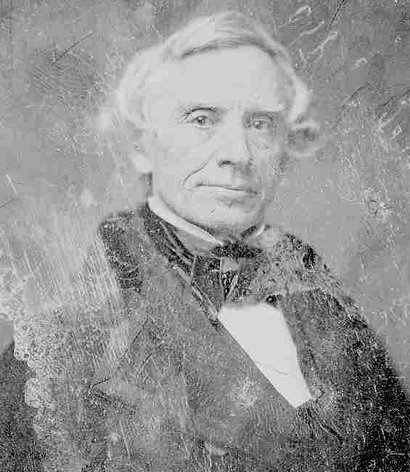
May 24, 1844 - Telegraph inventor Samuel Morse sent the first official telegraph message, "What hath God wrought?" from the Capitol building in Washington, D.C., to Baltimore.


May 25, 1787 - The Constitutional Convention began in Philadelphia with delegates from seven states forming a quorum. 


May 25, 1994 - After 20 years in exile, Russian author Alexander Solzhenitsyn returned to his homeland from Cavendish, VT. He had been expelled from Soviet Russia in 1974 after his three-volume work exposing the Soviet prison camp system, The Gulag Archipelago, was published in the West. Solzhenitsyn Bids Farewell to Cavendish 


Solzhenitsyn’s Return to Russia 

Monday, March 27, 2023

CGYHU for April 2023


As part of the Carmine Guica Young Historians (CGYH) program, the Cavendish Historical Society (CHS) provides teachers, students, families and the community with information on town, state and national history for the month ahead. This post is also available at the CHS blog. 


GENERAL INFORMATION

• If you have questions, want to arrange for a program or need more information, call 802-226-7807 or e-mail margocaulfield@icloud.com

• To learn more about the various programs that CHS offers for students and community, as well as opportunities close to Cavendish, go to the Resource Page

• The CHS Cares Closet, located next to the steps of the Museum is free, open 24/7, and offers a wide array of things to do, read etc. for both children and adults.


UPCOMING TRIPS/EVENTS: If you would like your home learner to participate in these programs, please contact the respective teachers for their grades.


• March 31 (Thursday): 5th grade talk on Peter Tumbo/Tumber, Cavendish resident, abolitionist, Revolutionary War Veteran, former slave from Africa who died at 106 in 1832. 1-2 pm

• April 26 (Wednesday): 6th grade trip to Sturbridge Village.

• July 29 (Saturday): Annual Town Wide Tag Sale from 9-2. If a class wants to do a fundraiser, this is a good day to do it. Email or call numbers above for more information. 


In addition to the above events, we’re planning a trip for the 3rd grade to the Shaker Village in Enfield and the annual flag laying and cemetery clean up by the 6th grade. 


NATIONAL PARK SERVICE EDUCATIONAL PROGRAMS: 
With warmer weather on the way, it’s a great time to take part in the National Park Service educational programs that are free. Cavendish is close to two National Parks-St. Gaudens in Plainfield, NH and Marsh, Billings, Rockefeller in Woodstock. 

• Junior Ranger Program: Designed for 6-12 they have a series of booklets that are excellent and can be downloaded for free. 

• 4th graders have free admittance to the parks

• Educational programs at the parks are free for classes

St Gauden’s programs for kids 

 Marsh Billings Rockefeller for kids 

-       Educational Professionals Partnership 

-       Park for Every Classroom 


Arbor Day (April 28th): Vermont celebrates this date the first Friday in May. That will be May 5th this year.  Learn more about how VT celebrates and how you can participate. 


Black Women’s History Month 


Deaf History Month.  This is a great time to learn basic American Sign Language (ASL). Gallaudet offers a free education program called ASL Connect that includes videos and much more. 


Earth Day (April 22): 
Earth Day is an annual event celebrated around the world on April 22 to demonstrate support for environmental protection. First celebrated in 1970, it now includes events coordinated globally by the Earth Day Network in more than 193 countries. This year’s theme is “Invest in our Planet.”


CHS is happy to work with students for a “green up” activity in Cavendish the week of April 22 . We can also do a simple “reuse” project, such as turning an old T shirt into a tote bag-no sewing required. This is a good time to promote the VT adage of, “Use it up, Wear it Out; Make it Do or Do without.”


    • EPA’s Earth Day website includes projects and ideas 

    • Vermont’s Agency of Natural Resources  is offering ideas and suggestions for the week. Note that the dates are out of sync with this year’s Earth Day. 


HISTORICAL DATES FOR APRIL: 
April is one of the more significant months in American history. Both the Civil War and the Revolutionary War began in this month, with the Civil War also ending in April. Both President Lincoln and Martin Luther King  were assassinated. Civil Rights bills were passed twice, once in 1866 and again in 1968. 

April 1 April Fools’ Day: Check out JSTOR’s The Completely True History of April Fools’ Day

April 2, 1792 - Congress established the first U.S. Mint at Philadelphia. The US Mint website  includes virtual tours and lots of interesting information about coins.

April 3, 1860 - The Pony Express service began as the first rider departed St. Joseph, Missouri. For $5 an ounce, letters were delivered 2,000 miles to California within ten days. The famed Pony Express riders each rode from 75 to 100 miles before handing the letters off to the next rider. A total of 190 way stations were located about 15 miles apart. The service lasted less than two years, ending upon the completion of the overland telegraph.

-       1995 - Supreme Court Justice Sandra Day O'Connor became the first woman to preside over the Court, sitting in for Chief Justice William H. Rehnquist who was out of town.

April 4, 1949 - Twelve nations signed the treaty creating NATO, the North Atlantic Treaty Organization. The nations united for common military defense against the threat of expansion by Soviet Russia into Western Europe.

-       1968 - Civil Rights leader Rev. Dr. Martin Luther King was shot and killed by a sniper in Memphis, Tennessee. 

April 6, 1917 - Following a vote by Congress approving a declaration of war, the U.S. entered World War I in Europe.

April 9, 1865 - General Robert E. Lee surrendered to General Ulysses S. Grant in the village of Appomattox Court House ending the Civil War.  

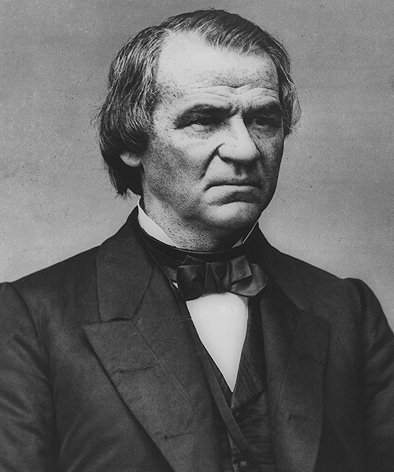
1866: Despite a veto by President Andrew Johnson, the Civil Rights Bill of 1866 was passed by Congress granting blacks the rights and privileges of U.S. citizenship.

April 11, 1968: A week after the assassination of Martin Luther King, the Civil Rights Act of 1968 was signed into law by President Lyndon B. Johnson. The law prohibited discrimination in housing, protected civil rights workers and expanded the rights of Native Americans.

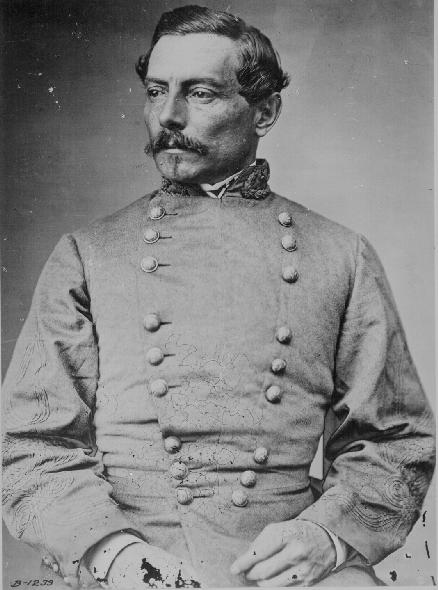
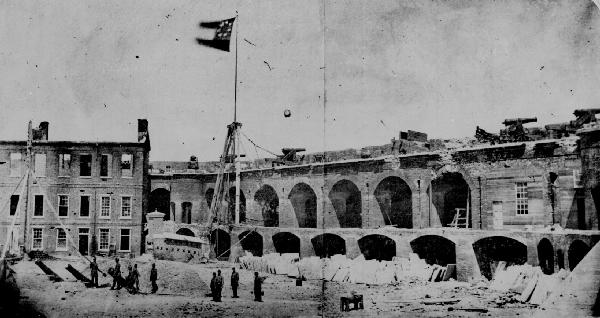
April 12, 1861: The American Civil War began as Confederate troops under the command of General Pierre Beauregard opened fire at 4:30 a.m. on Fort Sumter in Charleston, South Carolina. 

April 14, 1865: President Lincoln is shot 

April 16, 1862: Congress abolished slavery in the District of Columbia and appropriated $1 million to compensate owners of freed slaves.

April 18, 1775: The Midnight Ride of Paul Revere and William Dawes-rode out of Boston at 10 pm to warn patriots at Lexington and Concord of the approaching British. Check out the Paul Revere website 

April 19, 1775: Battle at Lexington Green. An unordered shot became “the shot heard around the world” and began the American Revolution. 

April 24, 1800: Library of Congress was established in Washington DC. Excellent website ttps://www.loc.gov  that offers a wealth of information as well as activities to do with students. 

April 26, 1986: Chernobyl nuclear power plant in the Ukraine explodes

April 30, 1789:  George Washington became the first U.S. President as he was administered the oath of office on the balcony of Federal Hall at the corner of Wall and Broad Streets in New York City.