Monday, June 15, 2020

FLAG DAY June 14, 2020: Remembering Cavendish Patriots/Old Revolutionary Cemetery


Below is the handout from the 6/14/20 Flag Day Program, which included to a visit to both the Revolutionary and Coffeen Cemeteries.

Flag Day: Commemorates the adoption of the United States flag on June 14, 1777 by resolution of the Second Continental Congress. "Resolved, That the flag of the thirteen United States be thirteen stripes, alternate red and white; that the union be thirteen stars, white in a blue field, representing a new constellation." The design was attributed to Francis Hopkinson, a NJ Congressman, who also designed Continental paper money, the first US coin, signer of the Declaration of Independence and contributed most of the designs for the Great Seal of the U.S.  This is also the “birthday” of the US Army. Congress adopted "the American continental army" on June 14, 1775.

French & Indian War: 1756-1763
Crown Point Road: Built by the British, linking Fort Number 4 in Charlestown, NH to Fort Crown Point on Lake Champlain in order to improve the supply chain in the French & Indian War.  Major John Hawks and 250 rangers cleared a roughhewn road through the forest. A path was cut across the elevation in southeastern Cavendish, now called Hawks Mountain. Soldiers traveling along this section of the road soon complained of its roughness. Another route bypassing Hawks Mountain was laid out during the next spring. An encampment twenty miles from Charlestown on the road gave the tributary of the Black River its present name Twenty Mile Stream. The Crown Point Rd had originally been an Indian trail. During the American Revolution, Colonial Militias, schooled by the British during the previous war, turned the tables on them and utilized the road to their own advantage, contributing to the ultimate British defeat.

1775-1783: American Revolutionary War: In a new settlement like Cavendish, one of the first orders of business would be to establish a militia for self-defense. Every able-bodied  man would be a member, with one elected as Captain. These groups were also called “training bands.” John Coffeen was captain of the first Cavendish Militia and during the Revolution was at the head of a troop of Rangers.  When the Revolution came, these military companies were called into action. Oliver Tarbell was captain of one of the “train bands” and the company met at the Tarbell farm. In addition there were “alarm-lists,” which enumerated all the men between 14 and 65 years of age, who were liable to be called upon in an emergency. Until 1847, all able-bodied men between 18 and 45 years of age, by law, were enrolled in the militia and were required to do military duty. Every man was required to keep arms and equipment as needed for actual service, and for so doing, his poll was exempt from taxation.

1777: Capt. Coffeen’s grain and grass fields were destroyed when 300 New England troops were stationed on his farm, while working on the Crown Point Road. Later in the year, after the surrender of Crown Point and Ticonderoga, militia, whose terms had expired or where discharged for misconduct, again encamped at Coffeen’s as they made their way home. The tavern house, which Coffeen had established, was immediately filled to overflowing. Those who could not get lodging inside, built fires with the boards that Capt. Coffeen had procured for building a large barn and house. They stripped his home of nearly everything it contained and the turned their horses into his grain. They justified their actions by declaring that the enemy would do it themselves within 48 hours. Capt. Coffeen sent his family to relatives in Rindge, NH. Coffeen’s place became an interim camp and as a result he buried a number of Revolutionary soldiers in his family’s burial grounds. It is believed that there are 12 unmarked graves of Revolutionary soldiers in the Coffeen Cemetery.

Minutemen: Civilian colonists who formed militia companies and were self-trained. They were known for being ready at a moment’s

Cavendish Old Revolutionary Cemetery: The earliest burial was that of Henry Proctor in 1778. While there are 17 known veterans of the Revolutionary War, it is anticipated that many more are buried in this cemetery. The Crown Point Rd passes to the right (north of this Cemetery.

Capt. Benjamin Adams Sr: Both Daniel & his son Benjamin were Revolutionary War Soldiers. Benjamin came to Cavendish, VT in 1778-9.

David Chubb: Served as a Private in 1st Lieutenant Joseph Little's Springfield Company of Colonel Joseph Marsh's Vermont Militia Regiment for 1 month and 21 days.

Thomas Gleason: VT Calvary

Hannah Lovell: Gravestone notes her involvement in the war. Research done by Carmine Guica found that she was “a very brave and patriotic woman who often carried messages by horse back to commanding officers of the Revolution.”

Pvt Edmund Tarbell: Veteran

Captain Leonard Whiting: A British Lieut. in the French & Indian War. Lawyer, farmer, inn keeper. He was seen as a Loyalist during the Revolution & was arrested several times. Moved to Cavendish in 1805. He and Dutton fought together in the French & Indian War.

Revolutionary War Patriots Buried in other parts of town:
Coffeens: The first legal settlers in Cavendish (1769) were Capt. John Coffeen, his wife Susanna and their eight children.
-       Susanna: She was the only woman who stayed in Cavendish throughout the war tending to soldiers, running the tavern etc. As a result of her service, the town awarded her property
-       Lake -Enlisted April. 1775 as a Minuteman. He served in Capt. Reuben Dickinson’s Company of Minutemen of Col. Benjamin Ruggles Woodbridge’s Reg’t. 
-       Michael: Enlisted as a Minuteman in May 1775 at the age of 17. He and his brother Lake fought at Bunker Hill. Michael serve in a number of battles including the Battle of Saratoga. He was a member of the “Green Mountain Boys.”
-       Capt. Coffeen attended the First Constitutional Convention of Vermont at Windsor as Cavendish’s delegate. Capt. Coffeen and Susanna are buried in the Coffeen Cemetery.

Salmon Dutton (founder of Cavendish Village): A minuteman under the command of Captain Samuel Stone in Colonel William Prescott’s regiment.

Parkers: Joshua Parker was a Captain in the Revolutionary War. His son Deacon Joshua Parker was 14 years old when he fought in the war. Both are buried in the Center Rd. Cemetery.

Captain Leonard Proctor(Founder of Proctorsville): Well respected for his leadership, he served as the company’s Second Lieutenant on the Lexington Alarm of April 19, 1775 in Capt. Minot’s Company, Col James Prescott’s Reg’t. “This brave group of men took up their muskets and fought as minute-men on the Lexington Green in the opening battle of the American Revolution. Leonard Proctor was 41 years old at this time and the father of seven children.” Proctor is buried in the Proctor Cemetery off of Route 131 in Proctorsville.

Peter Tumbo: Born in Africa and brought  to America via a slave ship. At 21, he was given his freedom. He fought in the Revolutionary War. In 1805, he purchased 50 acres of land from Lake Coffeen and lived in Cavendish until his death in 1832. The abolitionist newspapers of the day, listed him as being 106. It is believed that he, his first wife and daughter are buried in the Coffeen Cemetery. As a private cemetery, it did not require entry into town records.


802-226-7807  www.cavendishhistoricalsocietynews.blogspot.com PO Box 472 Cavendish VT 05142  margocaulfield@icloud.com

Monday, June 1, 2020

CHS Briefs June 1, 2020


 CHS is adjusting to the “new normal” in the Covid-19 era as follows:
• The Museum will be open by appointment only. Please call 802-226-7807 or e-mail margocaulfield@icloud.com to arrange for a visit. All visitors will be required to wear a mask and adhere to social distancing measures. If you are sick, please arrange another time for your visit.
• As can be seen in the Upcoming Events section below, there will be events throughout the summer, the second Sunday of each month. These will be outside.
• A summer newsletter will be issued in the next few weeks. We regret not publishing a spring edition but were unable to find a print shop that was open during this time.


UPCOMING EVENTS: Note all events require attendees to wear a mask and practice social distancing. All Sunday events begin at 2 pm.

The grave of a Cavendish Woman Patriot
 June 14 (Sunday): Visit to the Old Revolutionary Cemetery. Meet at the Museum at 2 PM. We will proceed to the Cemetery, which includes a short hike. Outside of the private Coffeen Cemetery, this is Cavendish’s oldest cemetery. If time permits, we will also visit the Coffeen Cemetery.

July 12 (Sunday): 1918 Flu Pandemic: It’s impact on Cavendish and Beyond. This talk will take place on the CHS grounds near the War Memorial

July 25 (Saturday): Cavendish Town Wide Tag Sale, 9-2. CHS will be at the gazebo on the Proctorsville Green

Aug. 9 (Sunday): Topic to be announced

Sept. 13 (Sunday): Annual Phineas Gage Walk & Talk. Meet at the Museum at 2 pm. We will walk to the site of the accident, approximately ¾ of a mile from the Museum, as well as visit the site of his boarding house and Dr. Harlow’s Surgery.

Oct. 11 (Sunday): Program for Indigenous People’s Day

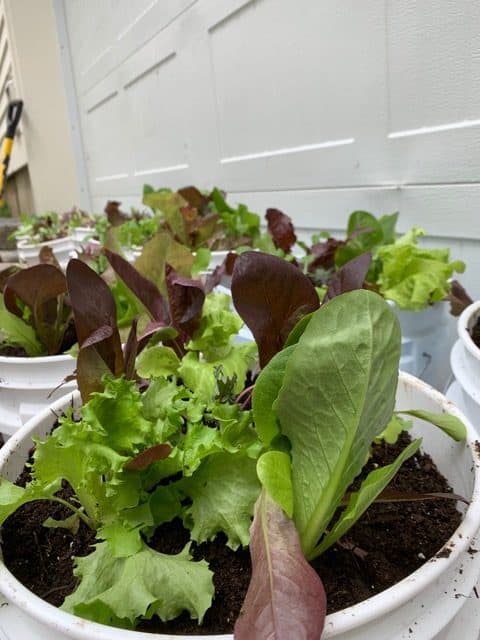
 PLANT SALE: For for the first time we did deliveries to people’s homes of tomatoes, salad buckets and herb pots. Due to Covid, some of our customers were staying at home, but still wanted to have container veggies. Thank you Bruce McEnaney for helping with the deliveries.

This year’s plant sale took a lot of juggling and effort not only to conform to state guidelines but was especially challenged by snow and freezing temps well into the middle of May.  However, with an incredible group of volunteers, we had the most successful sale we’ve had in years. A very special thank you to:
• Pang Ting: Where would be without the incredible soil from the Ting farm? Pang potted all of the tomatoes, salads and herbs. Thanks to her dedication and care, those who purchased these items can enjoy them well into the fall. 

• Svetlana & Kem Phillips: We have to thank Svetlana, who several years ago, put up six tomato plants to sell. As they say, the rest is history. And yes, she has an experiment underway of a new option for 2021. Kem & Svetlana have amazing gardens and are incredibly generous in sharing a wide variety of plants.

• Angela Asermly & Anna Shapiro: Between the two of them they provide an incredible array of perennials and it’s always a treat to see what treasurers they drop off each year. 

• Pieter van Schaik: Starting with Craig Rankin, the originator of the sale,  Pieter has made sure the tradition of the plant sale continued. Once again he was on hand to lend his expertise and had an interesting selection of lilies.
Honoring Craig Rankin, the founder of the plant sale.

• Barbara Dickey & Rolf van Schiak: The dahlias were a hit and we did snag two pots of Rolf’s red dahlias for the Cavendish War Memorial. 

• Gloria Leven: The hosta queen herself. Thank you for letting us dig up plants.

• Tim Calabrese & Rocky: Thank you for the pots

• Bob Naess: Not only thank you for helping to haul plants, and all the ways you help out during this event, but your truck made deliveries possible. It also provided an amazing diversion during the sale when the ball joint popped out. 

To all our shoppers, enjoy your plants and thank you for shopping. For those who purchased veggies, if you don’t have use for the containers, please drop them off by the Museum steps in the fall so we can clean and prepare them for the 2021 sale. 

Svetlana planting at the War Memorial
CAVENDISH WAR MEMORIAL: May 30, is traditionally when Cavendish observes Memorial Day. Due to Covid there were no parades or programs this year. However, we have not forgotten our Cavendish veterans who gave their lives stretching from the Revolutionary War onward. To mark this occasion, members of the Cavendish Historical Society, added to the garden around the Cavendish War Memorial. If all goes as planned, we will see red, white and blue flowerings this summer. Just prior to Memorial Day weekend some of our home school students helped to decorate veterans graves. On June 14 (Sunday) Flag Day, CHS will sponsor a walk & talk to the Old Revolutionary Cemetery in honor of Cavendish Revolutionary Soldiers and patriots.

To the question of why May 30th? In May 1868, General John A. Logan, the commander-in-chief of the Grand Army of the Republic (Union), issued General Order Number 11 that May 30 should become a nationwide day of commemoration for the more than 620,000 soldiers killed in the recently ended Civil War. The date probably was chosen for two reasons-there were no significant Civil War battles fought on that day and flowers would be in bloom.   

In 1971, federal law changed the observance of the holiday to the last Monday in May and extended the honor to all soldiers who died in American wars. While Vermont observes Memorial Day on the last Monday in May, the Town of Cavendish continues the celebration on May 30.

 NEW AT THE CHS BLOG

Friday, May 22, 2020

Birds of Cavendish

Since we've been staying home, many people have been talking about the birds they are seeing this spring. This initially reminded me of Aleksandr Solzhenitsyn, who in an interview after returning to Russia, commented that the birds of Vermont, while beautiful, didn't sing. Actually they do, and it's been incredible listening to all of their songs.

While the VT Audubon Society provides excellent information about the birds in our region, last weekend, we asked people to post pictures of birds they were seeing this spring. Since then, this post has taken on a whole new meaning.

Bird man doing what he loved best.

On May 21, Cavendish lost one of its most locally known and loved residents, "Bird Man," Bill Jansak, when he died from a heart attack.  Bird received that nick name because he loved birds and made them houses, put up feeders when he worked at the Transfer Station, and photographed them.

A true jack of all trades, no matter what he was doing, be it washing the Cavendish War Memorial, fishing, running a band saw, or setting off fire works, a cigar was always in Bird man's mouth. He could show up at your house at 6 in the morning with a treasure just for you, and many shared in the bounty of his fishing trips.
Winter Wren by Otis Nelson

Bird went about the business of caring for both the people and wildlife of Cavendish. It's in his honor and memory that we share the many pictures people posted to Facebook this past week.
Eagle and Osprey Otis Nelson

Rose Breasted Grosbeak by Allen Clark


Bald Eagle Pat Moore
Yellow Rumped Warbler Otis Nelson

Have a couple of buntings fighting for a little lady here in Cavendish. Faun-Marie Orton


Chickadee Allen Clark
Downy Woodpecker Allen Clark                                                                       Bald Eagle Allen Clark

It took 4 years and a new birdhouse to get the Wrensto nest in our tiny yard! Beth Kurash


Baltimore Oriole Leonard Lawson
Scarlet Tanager Leonard Lawson
Eastern Phoebe by Allen Clark
American Redstart Leonard Lawson
Barn Swall Leonard Lawson
Indigo Bunting Beth Kurash
Cardinal Melissa Ann Davis


Yellow-bellied sapsucker by Leonard Lawson


Chestnut Sided Warbler by Otis Nelson
Pittsburgh Oriole by Eddy Braucht

Rose breasted grosbeak by Courtney McGuire

Friday, May 1, 2020

CHS May Briefs


1918 Flu Pandemic in Vermont
Historical societies have a unique role to play in situations like the current Covid-19 pandemic. We must accurately compile information, physical reminders, photographs etc. of how the pandemic is shaping the lives of people of Cavendish, as well as remind our community of how Cavendish faced such challenges in the past.

As a result CHS is collecting everything from masks to personal journals. We suspended our normal “Cavendish Women You should Know” as part of Women’s History Month and started posting articles on how our past history prepares us for this pandemic.  

Since we’re on “Stay at Home,” we can’t get to the archives, particularly death records from the 1918 flu pandemic. However, we know there aren't diaries, contagion signs etc. so it’s helping us be more determined to leave a complete record of the Covid-19 pandemic.

CHANGES AHEAD: As we adjust to the new normal of social distancing, we’re looking to more virtual ways we can continue to provide CHS’s mission. Some of the things we’re considering include:

• Hands on History Kits:  Distributed via the CHS Tiny Museum-hopefully we can get one of our carpenters to create a “little library” type structure where we can put items in at various times that people can then take out.

• Walking/Driving Tours: Some of these we already have but we are working on more. We’ll make these available on-line as well as in print. Such walks would include: Proctorsville Village; Haunted Proctorsville; Cavendish Village; First Settlers;  Cavendish Cemeteries; Fitton Mill; and Calico Captive (first child of European descent born in Cavendish).

• Cavendish Quest: Similar to Valley Quest.

• Zoom in for Cavendish History: Instead of Sunday programs, we would offer a series of Zoom talks.

MUSEUM: We don’t know if we’ll be able to open the Museum this season. We are currently considering by appointment only but it will depend on state guidelines.

PLANT SALE: Because Vermont’s Farmer’s Markets are opening on May 1, and garden centers are already open, we are planning on holding the plant sale May 23 (Saturday) using Farmer Market guidelines in front of the Museum from 9-noon. The Museum will not be open that day.

We are  taking orders now for tomato plants, salad buckets and herb pots. If you have ideas for other veggies you'd like in a grow pot, let us know and we'll see what we can work out. Tomatoes are $10 (Early girl, Cherry, and Sun Gold)  and come in five gallon food grade buckets. Salad buckets and herb pots (include a variety of herbs) are $15 a piece. These can last well into the fall.

To order, please e-mail margocaulfield@icloud.com with the type and quantity of tomato plants you want as well as other items. If you are in the Okemo Valley, we will be doing
deliveries prior to the sale.

We understand that some people are in high risk groups and are reluctant to leave home but still want to work in their garden. If you are in that situation and want plants other than those described above, please let us know what you are looking for and we will try to deliver.

Finally, we need more containers for our salad buckets (must be at least 8 inches deep) and herb pots. If you have some you’d like to donate you can either e-mail or call 802-226-7807, or just drop them off at the Museum.

NEW AT THE CHS BLOG


UPCOMING EVENTS
May 23 (Saturday): CHS Annual Plant Sale. 9-noon in front of the Museum. Please pre order “Salad in a bucket” or “Tomatoes to Go” by e-mailing margocaulfield@icloud.com or calling 802-226-7807. We will be doing some deliveries prior to the sale.


Sunday, April 26, 2020

The Relevance of "One Day in the Life" to Covid-19


While Cavendish can recognize the writer Aleksandr Solzhenitsyn as the town’s expert on social distancing, they may not be aware that his first novella One Day in the Life of Ivan Denisovich is a “how to” manual for surviving challenging situations.

Growing up listening to and reading stories of the Holocaust and other atrocities of World War II, I often wondered how people survived such situations. As a teenager, I read One Day in the Life of Ivan Denisovich and found myself saying, “I get it.”

What struck me was the importance of living the moment you are in as well as not obsessing over things you have no control over.  Basically it was my first look at what today is called “mindfulness,” with a bit of Stoic philosophy thrown in.

In the midst of the worst sort of misery-a gulag in the dead of winter-this prisoner achieves a level of contentment that many wouldn’t have thought possible. Laying a brick, carefully and deliberately not only keeps him warm but keeps him focused, engaged and mindful.

I hadn’t re read the book until I started working on the Solzhenitsyn project for the Cavendish Historical Society (CHS). When I revisited it, I was blown away when I read the last few paragraphs of the book.

Having described in detail the challenges of being in a labor camp as a political prisoner, Solzhenitsyn describes what his character does before falling asleep. "Shukhov felt pleased with life as he went to sleep.  A lot of good things had happened that day.  He hadn't been thrown in the hole. The gang hadn't been dragged off to Sotsgorodok.  He'd swiped the extra gruel at dinnertime.  The foreman had got a good rate for the job.  He'd enjoyed working on the wall.  He hadn't been caught with the blade at the search point.  He'd earned a bit from Tsezar that evening.  He’d bought his tobacco.  And he hadn’t taken sick, had got over it.

Today there is a fair amount of research  in the field of positive psychology that support an association between gratitude and an individual's well-being. In part, it helps to create and sustain hope. Interestingly there is research that indicates that those who count their blessings before going to bed actually sleep better.

As it turns out, a very successful and highly practiced form of psychotherapy, Cognitive behavioral therapy (CBT), has its roots in Stoic philosophy. Since one of the most famous Stoic’s was Epictetus, who was born into slavery, it’s not surprising that Solzhenitsyn would have drawn some similar conclusions. We may not have control over our circumstances, but we can control how we interpret them and how we respond to them.

In the midst of our “stay at home” order, “One Day in the Life” is definitely worth a read. It’s short, can be read in one sitting and can help reframe this time of Covid-19 by reminding us that we do have control over how we respond as well as there are positive things happening all around us that we can be grateful for.

There are six English translations of the book, with the one by H.T. Willetts (New York: Farrar, Straus and Giroux, 1991) being the version recommended by the Aleksandr Solzhenitsyn Center.

Thursday, April 16, 2020

Cavendish & Vermont Flu Pandemic 1918


In the midst of Covid-19, we’ve been asked about what Cavendish went through during the 1918 flu pandemic. While there are certainly parallels between 1918 and 2020, at the moment, with the Stay at Home order in place, we can’t access town records, particularly death certificates.

According to Bruce McEnaney, Cavendish Historical Society (CHS) board members and town sexton, who has looked through 1918 records, he said a number of people had “Spanish flu,” influenza or “l’grippe” listed as the cause of death.

We will update this article once we are able to check town records.

Just as in January 2020, the media was obsessed with presidential impeachment hearings, so too was the focus directed elsewhere in 1918. In the midst of World War I (WWI) the first case appears to have been reported in Kansas at Fort Riley in March of 1918. In three weeks, over 1,100 of 56,000 troops were admitted to the hospital and 38 of them died.

Because Spain was not involved in the WWI, their media was free to report heavily on the flu, which is why it became known as the “Spanish” flu.

On Sept. 21, 1918, Charles Dalton, secretary of the Vermont State Board of Health, ordered local health officers to report any influenza cases. While the state’s newspapers carried his warning that the epidemic would reach Vermont in the coming days or weeks, the flu was already here. At the same time the papers posted Dalton’s warnings, they were also including that 40 students at Middlebury and 60 at Norwich University were already sick from it.  More than 50,000 Vermonters would contract the flu and more than 2,100 would die.
UVM Gym converted to care for flu patients.

As we have seen Vermont’s government struggle with closing down schools during the Covid-19 epidemic, their predecessors had the same fears. The Governor of Vermont in 1918, was Horace Graham. He wrote to Dalton on Sept. 26, “Do you not think some general action ought to be taken by the Board with reference to this epidemic. If it is contagious what about permitting all these conventions and meetings(?)” The Governor had other issues to consider as he was worried what effect banning gatherings would have on the sale of Liberty Bonds to fund the war in Europe.

While we see similar masks today, not exactly 6 ft apart.
Dalton issued an order to local health officials stating they had the right to close schools, churches, and other places of public assembly. Note that the state was leaving this in the hands of the local health officers. Dalton also stated, “Health officers should make it plain to all persons that the disease is spread by coughing and sneezing in public or around other people.”

Funerals were allowed, though if you were sick you weren’t allowed to attend. The massive numbers of deaths took precedence over war news.

Finally, on Oct. 4, Dalton ordered the type of “stay at home” order we are now experiencing, as he ordered all schools, churches and theaters closed, and prohibited all public gathers. The ban was lifted on Oct. 31.

Just as scammers are quite active during Covid-19, the charlatans of their day promoted Dr. Williams’ Pink Pills to “ease the stress of families of the ill. A clothier in Barre insisted everyone needed a raincoat as dampness was linked to illness. Vick’s VapoRub was another cure all being promoted.

Global travel as we know it today, did not exist then. However, because of WWI, the troops brought it with them and it quickly spread throughout the United States, Europe and the rest of the world.

The flu came in three waves with the first in the early months of 1918, the second in the fall of 1918 and the third in early 1919. Of the three phases, the most-deadly was the second wave. 

According to the Vermont Historical Society, First noted in reports coming from Fort Devens, Massachusetts, where American troops were assembled for transport to Europe to fight in World War I, the disease quickly spread into Vermont through the transportation centers of St. Johnsbury, St. Albans, White River Junction, Rutland, in the more densely populated communities of Burlington and its neighboring towns, and—most severely hit of all—Barre and Montpelier.

The disease typically ran its course in three weeks, but could kill victims in three days or less. Without the aid of antibiotics or antiviral medicines, physicians were unable to treat cases of flu or its complications, most frequently pneumonia. They were therefore reduced to making diagnoses, treating symptoms, and recording the cause of death. Newspapers carried advertisements for patent medicines, none of which was truly effective in preventing or curing the flu. Makeshift clinics were assembled in churches, libraries, and other buildings. The hospitals in Barre and Montpelier hastily constructed new wings or added a floor to accommodate the flood of patients. In Burlington, the mayor took the unusual and controversial step of opening a dispensary where flu victims with signed notes from their doctors could acquire carefully measured quantities of alcoholic beverages, thought to be a preventative medicine. A critical shortage of doctors, nurses, and medical facilities developed by mid-September, so that Vermont Governor Horace F. Graham turned down the desperate call of Massachusetts Lieutenant Governor Calvin Coolidge for doctors from Vermont. The senior class of medical students at the University of Vermont was pressed into field service; newspapers called on healthy and capable women to take on nursing duties.

By the end of September and into early October, town medical officers began exercising their authority to close all public meeting places—schools, churches, places of entertainment—and a statewide ban on public meetings went into effect on October 4. The Vermont Supreme Court, after postponing its October term several times, finally cancelled it altogether. Middlebury College was quarantined, and the University of Vermont postponed opening its autumn term.

The flu subsided in November—just as World War I came to an end—but scattered and less severe outbreaks persisted into February 1919. Statistics reported by the Board of Health for 1918 show the devastation. In a state with a population of 355,956 in the 1910 census, there were 43,735 cases of influenza in 1918, resulting in 1,772 deaths. The disease thus attacked 13 percent of the population and accounted for 25 percent of deaths for the year. These were approximate figures only, and do not include cases and deaths from pneumonia.

The epidemic had devastating effects on social and family life in Vermont. Because the Spanish flu had the peculiar pattern of fatally attacking people in the middle years, many children were left with one or no parents and were sent off to live with relatives elsewhere. In hard-hit communities, the deaths came so rapidly, in such great number, and under the stress of quarantine, that funeral ceremonies and interments were frequently performed unattended by mourners.

Cavendish was impacted by the flu, just as much as the rest of the state and country. Of the four Cavendish men who died in WWI, three died from flu. As Barbara Kingsbury noted in her book Chubb Hill Farm and Cavendish Vermont,  “The Civilian population was hit hard by Spanish influenza, too, though it spread the quickest in the crowded Army barracks and camps. The epidemic caused much more suffering on the “home front” than any fuel and food shortages."

To get a better idea of how many people in Cavendish may have died from the flu, we’ve used “Find a Grave” to determine how many people died  Sept-November in 1918. There were 19 burials in the Cavendish High Street Cemetery for that year. Of those with month of death, nine people died during that time frame. Hillcrest Cemetry in Proctorsville 11 deaths but few had the months listed, so it is difficult to determine what might have been flu deaths. However, this cemetery only had 4 burials the previous year, so it is expected a number of them were flu related.  

Do your part. Stay Home or 6 feet apart wearing a cloth mask or scarf.