Monday, April 26, 2021

CGYHU for May 2021


Below is the Carmine Guica Young Historians Update for May 2021. 


For more information, assistance, or to arrange a program, please e-mail margocaulfield@icloud.com or call 802-226-7807. As much lead time you can give us for hands on history kits and programs is best as it helps coordinate volunteers.


Please note that all of CHS’s volunteers are vaccinated but we continue to practice Covid protocols as far as masking and distancing.


Archeology: We’re excited to announce that we now have dig screens thanks to Dave Gallagher. If you have students that would like to engage in hands on archeology and/or have a place where you’d like to see some test pits dug, please let us know.


Preserve & Serve:
This is a CHS project where students work in the community. Below are activities for May:

-       Green Up Day: We can provide bags to clean up various routes in town. Note that bags are now available at the town office, where you can pick them up and note the route you will be taking. Bags can be dropped off for free at the transfer station during normal business hours.

-       CHS holds their annual plant sale Memorial Day weekend. We could use help in cleaning buckets. This needs to be done the beginning of the month.

-       Various members of our community could use help in preparing for the summer season. If you have students that would be available let us know.

-       May is when we work with the town sexton to clean up debris from the winter in our town cemeteries and lay flags in preparation for Memorial Day.


Arbor Day (April 26th): Vermont celebrates this date the first Friday in May. Learn more about how VT celebrates and how you can participate. 


Memorial Day (May 31):
There will be no formal observances this year in Cavendish due to Covid. This is a federal holiday to honor those who died in their performance of military duty. Approximately 25 places lay claim to be the originators of this holiday. Though an ancient tradition to celebrate those who died in battle by decorating their graves, the tradition took hold in the United States when Southern women decorated the graves of soldiers during the Civil War. Originally called “Decoration Day,” it was celebrated on May 31. This date was most likely selected as flowers were readily available and there were no major Civil War battles that day. The date was changed to the last Monday in May to give a three day weekend, and is considered the unofficial start of summer. The making and wearing of poppies is customary on this day and dates back to 1915 (WWI) and the poem “In Flanders Fields.” These are the directions we’ve used for making poppies with the sixth graders. If there is interest, happy to do a workshop with kids and/or can make kits for students to assemble.


HISTORICAL DATES FOR MAY


May 1:
Known as May Day, in some countries, and for many years in the Okemo Valley, baskets of small flowers are left outside peoples doors. An ancient spring festival, in socialists countries it’s also known as a worker’s holiday or Labor Day. While we’re happy to run a workshop-can be done outside-you can print directions for May Day Baskets, have the students cut out and assembly, fill with daffodils or candies and leave on the doors of neighbors and friends.


May 5: Cinco de Mayo, which means 5th of May, has now become a time to celebrate Mexican heritage. It is a national holiday in remembrance of the Battle of Puebla in 1862, in which Mexican troops under General Ignacio Zaragoza, outnumbered three to one, defeated the invading French forces of Napoleon III.

-       Alan Shepard became the first American in space. First American in Space Video James


May 7 1945, In a small red brick schoolhouse in Reims, Germany, General Alfred Jodl signed the unconditional surrender of all German fighting forces thus ending WWII in Europe


May 10: 1869 - The newly constructed tracks of the Union Pacific and Central Pacific railways were first linked at Promontory Point, Utah. A golden spike was driven by Leland Stanford, president of the Central Pacific


May 14 1607 - The first permanent English settlement in America was established at Jamestown, Virginia, by a group of royally chartered Virginia Company settlers from Plymouth, England. Historic Jamestown

• 1804 - Meriwether Lewis and William Clark departed St. Louis on their expedition to explore the Northwest.

• 1796 - Smallpox vaccine was developed by Dr. Edward Jenner, a physician in rural England. He coined the term vaccination for the new procedure of injecting a milder form of the disease into healthy persons resulting in immunity. Within 18 months, 12,000 persons in England had been vaccinated and the number of smallpox deaths dropped by two-thirds. The origin of Vaccines


May 20 1927 - Charles Lindbergh, a 25-year-old aviator, took off at 7:52 a.m. from Roosevelt Field, Long Island, in the Spirit of St. Louis attempting to win a $25,000 prize for the first solo nonstop flight between New York City and Paris. Thirty-three hours later, after a 3,600 mile journey, he landed at Le Bourget, Paris, earning the nickname "Lucky Lindy" and becoming an instant worldwide hero. From New York to Paris 1927 


• 1932 - Amelia Earhart became the first woman to fly solo across the Atlantic. She departed Newfoundland, Canada, at 7 p.m. and landed near Londonderry, Ireland, completing a 2,026-mile flight in about 13 hours. Five years later, along with her navigator Fred Noonan, she disappeared while trying to fly her twin-engine plane around the equator. National Air and Space Museum website for Earhart.


May 21, 1881 - The American Red Cross was founded by Clara Barton.


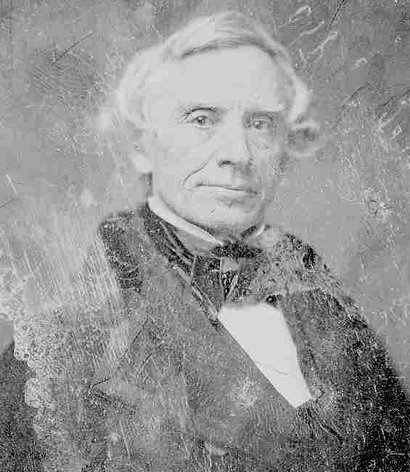
May 24, 1844 - Telegraph inventor Samuel Morse sent the first official telegraph message, "What hath God wrought?" from the Capitol building in Washington, D.C., to Baltimore.


May 25, 1787 - The Constitutional Convention began in Philadelphia with delegates from seven states forming a quorum.


May 25, 1994 - After 20 years in exile, Russian author Alexander Solzhenitsyn returned to his homeland from Cavendish, VT. He had been expelled from Soviet Russia in 1974 after his three-volume work exposing the Soviet prison camp system, The Gulag Archipelago, was published in the West. Solzhenitsyn Bids Farewell to Cavendish 


 Solzhenitsyn’s Return to Russia.


May 28 1961 - Amnesty International was founded by London lawyer Peter Berenson. He read about the arrest of a group of students in Portugal then launched a one-year campaign to free them called Appeal for Amnesty. Today Amnesty International has over a million members in 150 countries working to free prisoners of conscience, stop torture and the death penalty, and guarantee human rights for women.


FAMOUS BIRTHDAYS Golda Meir (May 3); Karl Marx (May 5); Sigmund Freud (May 6); Johannes Brahms (May 7); Harry Truman (May 8); Abolitionist John Brown (May 9); Songwriter Irving Berlin (May 11); Modern dance Pioneer Martha Graham (May 11); Nurse Florence Nightingale (May 12); Director Frank Capra (May 18); Pope John Paul II (May 18); Malcolm X (May 19); Playwright Lorraine Hansberry (May 18); Creator of Sherlock Holmes, Arthur Conan Doyle (May 22) ; Composer Richard Wagner (May 22); Ralph Waldo Emerson ( May 25); Athlete Jim Thorp (May 28); American Revolutionary War leader Patrick Henry (May 29); President John F Kennedy (May 29); Founder of the Russian Empire Peter the Great (May 30); Walt Whitman (May 31).


Thursday, April 1, 2021

CHS Briefs April 1, 2021


In spite of snowflakes this morning, Spring is definitely in the air. This month we begin the process of cleaning and preparing for the summer season, Covid permitting. Once again we will be planning a series of outdoor activities and the events sections is only a taste of what we’re planning.


If you have questions or would like to volunteer with CHS, please e-mail margocaulfield@icloud.com or call 802-226-7807.


UPCOMING EVENTS

May 29 (Saturday): Annual Plant Sale from 8:30-Noon. Early bird sale on Friday May 28 from 6-7 pm.


May 30 (Sunday): Museum opens for the season-Covid dependent-on Sundays from 2-4


June 19 (Saturday): Midsummer Night’s Eve Cavendish Village Ghost Walk. Meet at the Museum at 8 pm.


July 31 (Saturday): 11th Annual Cavendish Town Wide Tag Sale. 9-2.


September 12 (Sunday): Annual Phineas Gage Walk & Talk, meet at the CHS Museum at 2 pm. Walk portion if about a mile and a half and includes a visit to the site of the accident.


NEW AT THE CHS BLOG

Carmine Guica Young Historians Update: Includes information for remote learners, teachers, parents etc. Contains a lot of historical information and resources for the month ahead.

Cavendish Women You Should Know: Alice Wheeler Bertrand, Doll Maker

Irish Heritage Month: Kindred Spirits

Cavendish Women You Should Know

Winter Edition of Scribbler II


WE COULD USE YOUR HELP

Plant Sale: If you are dividing plants or have extras, please consider donating them to the CHS Annual Plant Sale. We can provide you with pots and soil. If you need some assistance we can possibly help with that as well.


COVID-19: CHS continues to collects items, stories etc. associated with the pandemic for archival purposes. If you have something you would like to donate, please contact us.


CHS CARES CLOSET: If you or someone you know would like to receive items from the closet, but can’t get there, e-mail margocaulfield@icloud.com or call 802-226-7807 with your requests for books, puzzles, craft projects, hands on history kits, masks etc. All items will be placed on the porch, mail box or a designated spot. If you have items you’d like to donate to the Closet, please call 802-226-7807 or e-mail margocaulfield@icloud.com


Donations for CHS can be sent to CHS, PO Box 472, Cavendish, VT 05142. Checks should be payable to the Cavendish Historical Society.

Friday, March 26, 2021

CGYHU for April 2021

Below is the Carmine Guica Young Historians Update for March 2021. For more information, assistance, or to arrange a program, please e-mail margocaulfield@icloud.com or call 802-226-7807. 

With the warmer weather approaching, there are various opportunities for field trips as well as having students involved in helping out in the community through CHS’s Preserve and Serve program. This can include helping with gardening, cleaning gravestones, or assisting some of our seniors with outdoor chores.

Arbor Day (April 26th): Vermont celebrates this date the first Friday in May. Learn more about how VT celebrates and how you can participate at the VT Community Forestry Website.


Black Women’s History Month 


Deaf History Month.  Note that Deaf History month extends from March 13 to April 15th. This is a great time to learn basic American Sign Language (ASL). Gallaudet offers a free education program called ASL Connect  that includes videos and much more.


Earth Day (April 22): Earth Day is an annual event celebrated around the world on April 22 to demonstrate support for environmental protection. First celebrated in 1970, it now includes events coordinated globally by the Earth Day Network in more than 193 countries.


CHS is happy to work with students for a “green up” activity in Cavendish the week of April 22 . Please let us know in advance if you are interest so we can be sure to have sufficient bags for the project. While Green Up Day is May 1, there is so much debris lying the town will once again be providing green up bags when they become available.


- Earth Day 

- EPA’s Earth Day website includes projects and ideas

- Living Earth Virtual Festival from the National Museum of the American Indian April 21-April 25

- Vermont’s Agency of Natural Resources  is offering ideas and suggestions starting with Monday April 22 and running until Friday April 26.


HISTORICAL DATES FOR APRIL: April is one of the more significant months in American history. Both the Civil War and the Revolutionary War began in this month, with the Civil War also ending in April. Both President Lincoln and Martin Luther King  were assassinated. Civil Rights bills were passed twice, once in 1866 and again in 1968. Weather and Covid permitting, this is a good month to visit Boston and walk the Freedom Trail.


April 1 April Fools’ Day: Check out JSTOR’s The Completely True History of April Fools’ Day.

April 2, 1513 - Spanish explorer Ponce De Leon sighted Florida and claimed it for the Spanish Crown after landing at the site of present day St. Augustine, now the oldest city in the continental U.S.

April 2, 1792 - Congress established the first U.S. Mint at Philadelphia. The US Mint website includes virtual tours and lots of interesting information about coins.

April 3, 1860 - The Pony Express service began as the first rider departed St. Joseph, Missouri. For $5 an ounce, letters were delivered 2,000 miles to California within ten days. The famed Pony Express riders each rode from 75 to 100 miles before handing the letters off to the next rider. A total of 190 way stations were located about 15 miles apart. The service lasted less than two years, ending upon the completion of the overland telegraph.

-       1995 - Supreme Court Justice Sandra Day O'Connor became the first woman to preside over the Court, sitting in for Chief Justice William H. Rehnquist who was out of town.

April 4, 1949 - Twelve nations signed the treaty creating NATO, the North Atlantic Treaty Organization. The nations united for common military defense against the threat of expansion by Soviet Russia into Western Europe.

-       1968 - Civil Rights leader Rev. Dr. Martin Luther King was shot and killed by a sniper in Memphis, Tennessee.

April 6, 1896 - After a break of 1500 years, the first Olympics of the modern era was held in Athens, Greece.

1917 - Following a vote by Congress approving a declaration of war, the U.S. entered World War I in Europe.

April 9, 1865 - General Robert E. Lee surrendered to General Ulysses S. Grant in the village of Appomattox Court House ending the Civil War.  

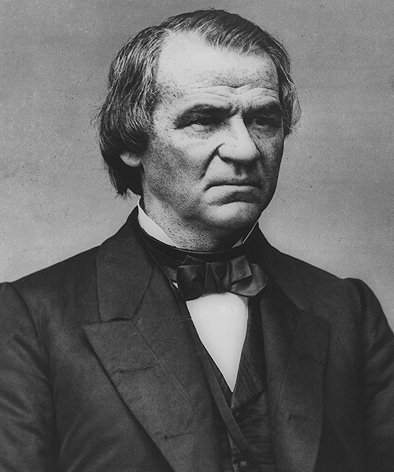
1866: Despite a veto by President Andrew Johnson, the Civil Rights Bill of 1866 was passed by Congress granting blacks the rights and privileges of U.S. citizenship.

April 11, 1968: A week after the assassination of Martin Luther King, the Civil Rights Act of 1968 was signed into law by President Lyndon B. Johnson. The law prohibited discrimination in housing, protected civil rights workers and expanded the rights of Native Americans.

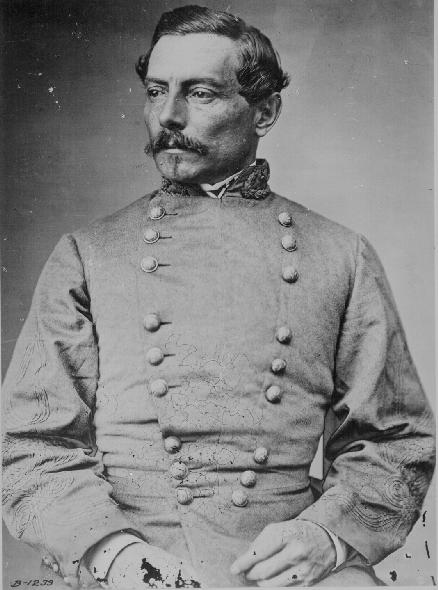
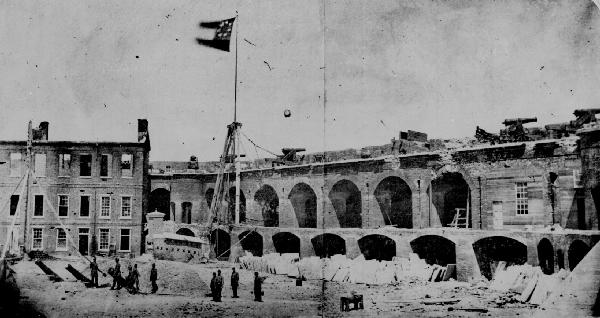
April 12, 1861: The American Civil War began as Confederate troops under the command of General Pierre Beauregard opened fire at 4:30 a.m. on Fort Sumter in Charleston, South Carolina.

April 12, 1961: Russian cosmonaut Yuri Gagarin became the first human in space.

April 14, 1865: President Lincoln is shot

April 15, 1912: Titanic sinks after hitting an iceberg

April 16, 1862: Congress abolished slavery in the District of Columbia and appropriated $1 million to compensate owners of freed slaves.

April 18, 1775: The Midnight Ride of Paul Revere and William Dawes-rode out of Boston at 10 pm to warn patriots at Lexington and Concord of the approaching British. Check out the Paul Revere website

April 19, 1775: Battle at Lexington Green. An unordered shot became “the shot heard around the world” and began the American Revolution.

April 24, 1800: Library of Congress was established in Washington DC. Excellent website that offers a wealth of information as well as activities to do with students.

April 26, 1986: Chernobyl nuclear power plant in the Ukraine explodes

April 30, 1789:  George Washington became the first U.S. President as he was administered the oath of office on the balcony of Federal Hall at the corner of Wall and Broad Streets in New York City.


FAMOUS BIRTHDAYS Hans Christian Anderson (April 2, 1805); April 3, 1783 Washington Irving; April 5, 1856 Booker T. Washington;  April 6, 1483 Renaissance artist Raphael; April 8, 563 B.B Buddha; April 9, 1898 Paul Robeson; April 13, 1743 Thomas Jefferson; April 16, 1867 Wilbur Wright; April 16 1889 Charlie Chaplin; April 20 Adolf Hitler; April 22, 1870 Vladimir Lenin; April 23 1564 William Shakespeare; Aril 25, 1874 Guglielmo Marconi, radio inventor; April 26, 1785 John Audubon, naturalist; April 26 1822 Landscape architect Frederick Law Olmsted; April 27, 1791Telegraph inventor Samuel FB Morse; April 27, 1822 Ulysses S. Grant; April 28 1758 James Monroe

Monday, March 15, 2021

Cavendish Women You Should Know: Alice Wheeler Bertrand, Doll Maker

Alice's self portrait

Born in 1898, Alice Wheeler Bertrand grew up in Pinney Hollow, a village of Plymouth VT. She created highly realistic character dolls, perfecting a technique using felted wool and wire. She depicted family members and other people she knew in Plymouth and Proctorsville, Vermont.  The dolls bear an uncanny likeness to their subjects.


Alice Bertrand gained national fame for her dolls, winning a blue ribbon at the New York World’s Fair in 1964.  Her descendants donated nearly two dozen dolls to the President Calvin Coolidge State Historic Site in 2000, which are on display in the Aldrich House. They were also featured in their “Homespun Treasures” exhibit at the Museum & Education Center a few years ago.


Married to Claude, the Bertrands lived on Depot St., the ranch house just before the Golden Stage Inn. Alice died in 1976 while Claude died in 2000. Both are buried at the Hillcrest Cemetery in Proctorsville.


Recently, the Cavendish Historical Society received a donation of two of Alice’s dolls and, thanks to social media, we’re learning a lot more about Alice and who these dolls depicted.


In the accompanying letter from the donor, Patty White, she noted, “The dolls were hand made in the likeness of a couple who lived in town, not sure who. My Aunt, was good friends with Claude’s sister Sally Rellis, who has also been dead now for several years, although she live to be 104!.”


Ralph and Doris Bates?

The consensus is that the dolls represent Ralph and Doris Bates who also lived on Depot Street in Proctorsville. The details of  each doll is fascinating. “Doris” is holding a purse, which appears to have beeb bought, but when opened, it reveals a tiny homemade wallet. There is as much detail in the under garments as there is in the outer wear.


If you have any information you’d like to share about, Alice or the Bates family, please e-mail margocaulfield@icloud.com call 802-226-7807 or mail CHS, PO Box 472, Cavendish, VT 05142.


The dolls will be on display at the CHS Museum starting this summer, when the Museum opens with the annual plant sale, May 29.  


A very special thank you to all who commented on the various posts. Particular thanks to  Dr. Stacia Spaulding, Norma Randall, Penny Trick, and William W. Jenney, Regional Historic Site Administrator, President Calvin Coolidge State Historic Site.

Thursday, March 11, 2021

Irish Heritage Month: Kindred Spirits


March is Irish Heritage Month. This year we are honoring it in a unique way, which is inspired by the sculpture “Kindred Spirits. 


In a small Irish town, Mileton, County Cork, a stainless steel sculpture of nine handmade feathers curves up from a concrete foundation, symbolizing the shape of an empty bowl. These feathers represent the Choctaw Nation from Oklahoma and their shared history with Ireland.

Kindred Spirits Sculpture


From 1845 to 1852, the Irish were in the midst of the “Potato Famine.” Due to potato blight, which caused the predominate crop of Ireland to rot, combined with a repressive British government that ruled Ireland at the time, people were starving. Note, potato blight is caused by Phytophthora Infestan, a fungus that is extremely hard to treat in potato and tomato crops once a field has been infected. As spores become airborne, the infection quickly spreads to adjacent fields and can easily decimate farming communities for miles. 


In 1841, Ireland had a population of just over eight million, of which two-thirds were dependent on agriculture for their survival, yet rarely received a working wage. They had to work for their landlords in return for the patch of land they needed to grow enough food for their own families, with the potato being the only crop they could grow that met their nutritional needs.


During the “Great Hunger,” about 1 million people died and more than a million fled the country. Ireland’s population never recovered and today has a population of about 5 million (includes the Republic of Ireland and Northern Ireland). 


The famine "became part of the long story of betrayal and exploitation which led to the growing movement in Ireland for independence."


At this time, in Indian Territory, Choctaw people were continuing to rebuild their lives after the forced removal from our homeland sixteen years earlier. [The Choctaw Indians were driven out of their lands in Alabama, Arkansas, Mississippi and Louisiana to "Indian Territory,"lands west of the Mississippi River, today Oklahoma, by the enforcement of the Indian Removal Act. Starting in 1831, the “trail of tears” caused the deaths of approximately 2,500 Choctaw.] Remembering our hardships along the Trail of Tears, Choctaw families identified with the anguish of the spread of disease and the starvation of the Irish people; it was a familiar heartache. 


In 1847, after the first potato blight, Choctaw people collected money and donated it to families in Ireland through a philanthropist by the name of Myndert van Schaick (Kinealy 2015, Donnelly 2002). Schaick led the General Irish Relief Committee located in New York City who gave the money to the Society of Friends in Dublin, Ireland, which had been established in 1846 after the first potato blight. The Society of Friends worked with the Quakers to provide direct support to Irish families in the form of cash, fuel, seeds, blankets, and soup kitchens (Kinealy 2015). Several historical accounts attest to funds donated by Choctaw People, some at various locations, others at only one location, some even credit a much larger donation, but it is clear that at least $170 [equivalent to $5,423 today] did make it to Ireland in this manner.  


What is particularly interesting about this story is the very nature of how the Quakers helped the Irish people. Other religious organizations providing relief wanted something in return for their donation to Irish families. Whether it was a day’s labor, school attendance by Irish children, a verbal conversion, a baptism, or other request, aid was conditional. The Quakers, however, provided their services to Irish families unconditionally. This unconditional charity likely appealed to Choctaw people having suffered so greatly the years leading to removal, during the Trail of Tears, and after. This single act of compassion to seeming strangers some 4300 miles across the Atlantic Ocean, united two nations, forging a bond to last for generations. Iti Fabvssa Kindred Spirits


Told through generations, the story of generosity resulted in trips by both nations. In 1990, Choctaw Nation leaders traveled to Ireland, and in 1995 Irish President Mary Robinson visited the Choctaw.


                                     Kindred Spirits-The Choctaw-Irish Bond Lives On 


In this time of Covid a Go Fund Me campaign, Navajo & Hopi Families Covid-19 Relief Fund has gone viral among the Irish and they are helping to raise millions of dollars of much needed funds through small contributions.

Below are some of the comments that have accompanied recent donations:


In acknowledgment of the Choctaw and Cherokee Nations' generosity to the people of Ireland in the Gorta Mór of 1845 to 1852. Thank you! Fiona Flanagan


When we stand together we are stronger. I also thank you for your help in our time of need ( the famine). Laurence O’Neill


For your support given to the people of Ireland during the famine, I now share my support with you . Thank you. Christophe Cosgrove


$170 donated in memory of the donation by the Chocktaw first nation r to help my ancestors at a terrible time in our history. Their kindness and compassion to a faraway country at a time they had their own needs will never be forgotten here in Ireland. Noreen McCarthy


I donated because the Navajo and Hopi tribes have a culture and dignity which is beautiful to behold. And like us, the Irish, they see the importance of keeping their culture strong, through their own language. Ar aghaidh libh! Liam Reamonn

Adversity often brings out the best in people, the Choctaw tribe said in a statement. “We are gratified – and perhaps not at all surprised – to learn of the assistance our special friends, the Irish, are giving to the Navajo and Hopi nations. Our word for their selfless act is ‘iyyikowa’ – it means serving those in need.”

The Choctaw and Irish had become kindred spirits since the potato famine, the tribe said. “We hope the Irish, Navajo and Hopi peoples develop lasting friendships, as we have. Sharing our cultures makes the world grow smaller.”

The Kindred Spirits story has special meaning for me as my family came to America in 1850 from County Cork Ireland, where this sculpture stands. It is very possible that the generous donation of the Choctaw people allowed my ancestors to live long enough to board a ship and start a new life in America.

Thursday, March 4, 2021

Cavendish Women You Should Know


March is National Women's History Month. To celebrate Cavendish's women, we continue to expand on "Cavendish Women You Should Know."

Below are links to stories about Cavendish Women

First Ladies of Cavendish: Political/Postmaster & other town positions  

“Keepers”of Cavendish history  

 Beyond Cooking and Cleaning An overview of what life was life for women who helped to settle Cavendish as well as women who worked in the mills, owned businesses as well as

Beyond Cooking and Cleaning: Cavendish Teachers 

Young Women Entrepreneurs-Artists Lily Calabrese and Miranda Kae Jewelry 

Phyllis Bont 

Ethel Roosevelt Derby 

Barbara Phillips/Cavendish Mills

Natalia Solzhenitsyn & Yekaternia Svetlova

Taylor Tice Outer Limits Brewery

Mary Mattison van Schaik